The power of a story resides not only in its plot but also in its construction. Narrative techniques are the methodical instruments through which writers translate ideas into experience. They govern pace, orchestrate revelation, and modulate the reader’s proximity to character and event. Mastery of these instruments is what synthesizes a coherent experience from discrete events.
A meaningful examination of these methods alters the act of reading. It moves the reader from the act of passive reception to active analysis by uncovering the choices that produce a story’s specific effect. This article examines ten such techniques. It explores narrative techniques and their capacity to generate intellectual engagement that deepens one’s encounter with varied works of literature.
1. “Show, Don’t Tell”

From a reader’s perspective, “Show, Don’t Tell” highlights the craft behind storytelling through vivid imagery and precise detail. It prioritizes demonstration over declaration. The method transforms abstract states into concrete evidence a reader can perceive. Instead of presenting a statement like “John was angry,” the narrative might depict his knuckles whitening or the clipped cadence of his speech.
Effective storytelling requires balancing “showing” and “telling.” Scenes rich in sensory texture construct an immersive immediacy. Conversely, concise exposition provides necessary context and maintains narrative pacing. A genre thriller might employ direct statements to sustain momentum, while introspective moments benefit from sensory details that evoke mood. This dynamic between showing and telling forms the technical basis for modulating a reader’s engagement and comprehension.
2. Foreshadowing

Foreshadowing operates as a narrative gesture toward future events. It embeds early, often unobtrusive, clues that add layers of intrigue and gain significance upon a later revelation. A character’s offhand remark or a seemingly minor object planted in an early scene can retrospectively illuminate a critical plot twist. This technique constructs anticipation and cultivates a reader’s active participation in piecing the narrative together.
The key to effective foreshadowing lies in its subtlety. A clumsy hint can feel contrived, but a well-placed detail weaves seamlessly into the initial context. When clues appear throughout the text in subtle succession, the effect creates a steady build of suspense. This careful calibration heightens the impact of pivotal moments without sacrificing surprise, and the ultimate revelation then feels both surprising and inevitable.
3. Engaging Characters

Complex characters are built from internal contradiction and specific, observed detail. They are rarely flawless; their quirks, flaws, and vulnerabilities make them relatable and persuasive. By exploring both their weaknesses and strengths, authors craft multidimensional characters who feel authentic, whose lasting impression is forged not by perfection but by the intricate, often flawed, texture of their humanity.
Characterization operates on multiple levels—physical detail and sensory cues deepen our perception of character. External manifestation makes that depth legible: a habitual gesture, a particular speech rhythm, or a telling interaction with their environment. A character who absentmindedly straightens objects in a room reveals a different internal state than one who leaves doors ajar. These concrete, sensory details do more than describe; they dramatize personality. This grounding strengthens their presence and draws the reader more fully into the story’s texture.
4. Tension and Conflict
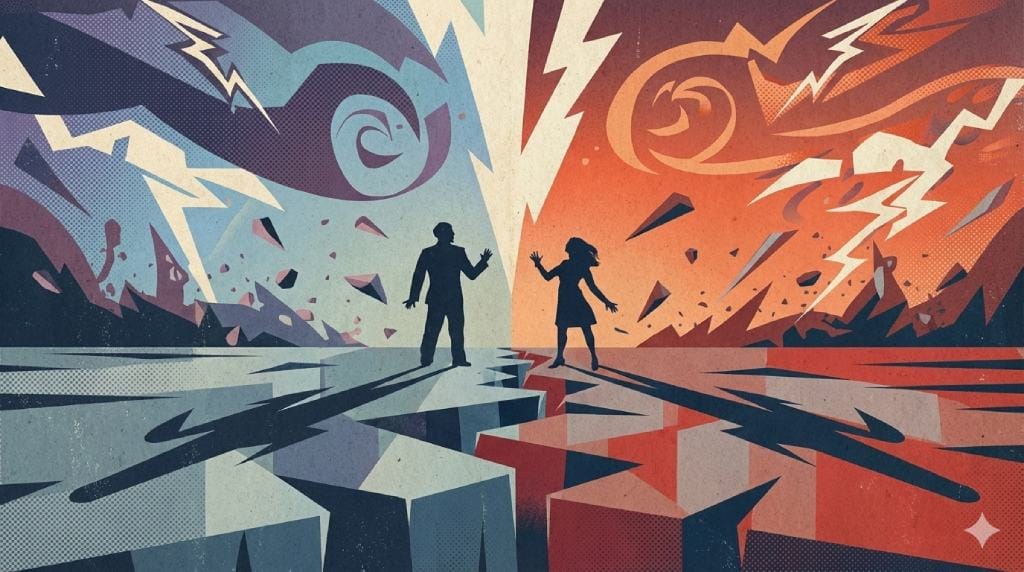
Narrative propulsion is generated by friction: the clash of opposing wills, the collision of circumstance with desire, or the internal schism within a single consciousness. This friction, whether externalized as open conflict or internalized as psychological struggle, creates the essential stakes and uncertainty that command a reader’s sustained attention.
Specific techniques intensify this foundational tension. Dramatic irony creates a potent suspense by granting the reader knowledge a character lacks. Pacing manipulates the reader’s temporal experience, using the strategic acceleration or deceleration of narrative time to modulate pressure. The juxtaposition of timelines (alternating between past, present, and future) can compound intrigue. These are not merely ornamental tricks; they are instruments for controlling narrative pressure and deepening engagement.
5. Vivid Imagery

Imagery functions as the sensory conduit of narrative. By appealing to sight, sound, smell, taste, and touch, vivid imagery translates language into perceptible experience, constructing a world that resonates on a visceral level. A meticulous description—the specific aroma of rain on dry soil or the crunch of leaves underfoot—does more than illustrate; it builds an immersive environment that activates the reader’s sensory imagination.
Beyond scene-setting, imagery serves a crucial metaphorical function. It provides a concrete vessel for abstract emotional or thematic content. Describing a silence as “thick enough to stifle” or ambition as a “cold, sharp stone in the gut” makes intangible states palpable and immediate. This technique closes the distance between the reader’s perception and the character’s internal reality, painting a vivid mental picture that draws the reader closer to the character’s inner state.
6. Dialogue Techniques

Effective dialogue operates through two distinct, interdependent layers.
The textual layer is the literal speech: the words spoken, chosen for their denotative meaning and their capacity to characterize. It encompasses a speaker’s unique rhythm, syntax, and lexicon. A corporate lawyer’s precise vocabulary, for example, constructs a different persona than a street artist’s metaphorical, elliptical slang. This layer provides immediate social and psychological data, anchoring the character in a specific world.
The subtextual layer is the unspoken narrative conveyed beneath the words. It communicates true intention, emotion, and conflict through means other than direct statement. Subtext is carried by a character’s physical actions during a conversation (a clenched jaw, an averted gaze). It resides in a loaded pause, a change in vocal register, or a descriptive detail that directly contradicts the spoken line (e.g., claiming “I’m calm” while hands fumble with a glass). Here, the action or omission holds the authentic truth.
The tension between these two layers (between what is said and what is meant or done) transforms dialogue from mere exposition into a primary site of dramatic conflict and psychological revelation. The reader’s engagement shifts from listening to interpreting, actively discerning the real story unfolding in the gap between speech and behavior.
7. Narrative Structure

Narrative structure is the architecture of time and perspective within a story. It governs the sequence in which information is revealed and the vantage points from which events are witnessed.
Traditional models, such as Freytag’s pyramid with its stages of exposition, rising action, climax, falling action, and resolution, establish a linear logic of cause and effect. This progression creates a clear, directed momentum. Writers may intentionally subvert this model to achieve specific ends: a nonlinear structure, built from fragmented timelines, forces the reader into an active role, piecing together chronology and causality; the use of multiple or alternating perspectives dismantles a singular narrative truth; or presenting a pivotal event through different characters’ accounts reveals its complexity through contradiction and layered testimony.
Ultimately, structure is not a neutral container but an active semantic device. The chosen form, whether adhering to convention or innovating beyond it, fundamentally determines the reader’s cognitive and interpretive journey through the narrative.
8. Symbolism and Themes

Symbolism and theme operate as the conceptual undercurrents of a narrative, connecting specific events and images to broader patterns of ideas.
Symbolism embeds abstract meaning within a story’s concrete reality. An object, setting, or repeated motif, like the green light in F. Scott Fitzgerald’s The Great Gatsby (1925) or the moors in Emily Brontë’s Wuthering Heights (1847), functions literally within the plot while accumulating a secondary, figurative significance. Its power depends on this dual nature: it must be an authentic part of the world before it can represent an idea beyond it.
Theme, on the other hand, constitutes the central subjects a narrative investigates. It is not simply a message but a persistent line of inquiry, such as the nature of justice, the cost of ambition, or the fragility of memory, that emerges from the accumulation of plot, character choices, or symbolic imagery. The story explores these questions through its action rather than stating them directly.
Together, symbolism and theme transform a plot from a sequence of events into a coherent intellectual and emotional exploration. They provide the channels through which a story’s specific occurrences speak to more universal conditions.
9. Unreliable Narrators

An unreliable narrator provides a compromised account, filtered through bias, ignorance, or deceit. This technique obligates the reader to become an investigator, piecing together a credible reality from a narrative laced with contradiction and omission. Characters like Holden Caulfield in J. D. Salinger’s The Catcher in the Rye (1951) illustrate how perspective itself becomes the central subject of the story.
The device fundamentally reconfigures the act of reading. It shifts the narrative’s substance from declared fact to inferred truth, engaging the reader in a critical examination of how stories are constructed and where meaning is ultimately derived. The resulting experience is one of active interpretation rather than passive reception.
10. Engaging Openings and Endings

A story’s opening operates as a contract, establishing its fundamental rules of tone, style, and perspective within its first moments. It must compel immediate investment, whether through evocative imagery, arresting action, or a distinctive narrative voice. The famous first line of Charlotte Brontë’s Jane Eyre (1847)—”There was no possibility of taking a walk that day.”—does more than describe weather; it instantly establishes a confined atmosphere and a voice of restrained tension.
The ending provides the narrative’s final, definitive gesture. It resolves (or pointedly chooses not to resolve) the central tensions the story has set in motion. An effective conclusion delivers a sense of culmination that feels both surprising and inevitable. Whether offering cathartic closure or strategic ambiguity, a potent ending fixes the narrative’s afterimage in the reader’s consciousness.
Further Reading
- Literary Definition of Narrative Techniques by Christopher Cascio, seattlepi.com
- Thoughts on Narrative Technique by Dominick Montalto, LinkedIn
- What are the different narrative techniques in literature? on Quora
- What are some of your favorite narrative techniques? on Reddit