
Explore This Topic
- The Second Book: How Writers Follow Up Their Debut
- When the Follow-Up Falls Short: Second Books Judged Against a Difficult Standard
- When the Debut Is Forgotten: Second Books That Made the Name
- When the Second Book Confirms: Follow-Ups That Deepened the First
- When the Second Book Repeats: Writers Who Take Up the Debut Again
My Reading Note
I read Murakami’s first two books in the same week, in the order he wrote them, and the effect was of watching someone pace out a room before deciding where the furniture would go. Pinball, 1973 is not a better book than Hear the Wind Sing—it is the same book with the windows open, but I have never been able to decide whether that is a small achievement or the whole method. I wrote this piece to find out why, only to come away with three different answers.
A second book that resembles the first is usually read as a failure of nerve. The writer is assumed to have gone back to material the debut had exhausted. The critical vocabulary for this is well established: the sophomore slump, second book syndrome, or the sense that nothing has been added. The judgment assumes that a writer’s development should take a new direction, so that a second book which repeats the first has nothing new to say.
The three writers in this essay complicate that assumption, and they do so in different ways. Haruki Murakami’s Pinball, 1973 (1980) is a direct sequel, carrying forward the narrator and the Rat from Hear the Wind Sing (1979) into another short, elliptical book about memory and obsession. Cormac McCarthy’s Outer Dark (1968) shares no characters with The Orchard Keeper (1965), but it returns to the same Appalachian darkness, moving from the first novel’s grounded regional realism toward a more explicitly gothic and allegorical mode. Martin Amis’s Dead Babies (1975) reloads the satirical apparatus of The Rachel Papers (1973) and aims it on overlapping targets: privileged youth, sexual grotesquerie, the nastiness of late adolescence.
What separates these three cases is not whether they repeat but what that repetition accomplishes. Murakami builds a fictional world, piece by piece, from the same small set of materials. McCarthy, meanwhile, refines a mode, working the same vein until it yields something harder. Amis traps himself—the provocation that worked once does not work twice, and the reviews of Dead Babies said so plainly. This essay takes each case in turn and asks what the second book did with the territory the first book had already claimed.
The Framework: Criteria for Comparison
A writer’s first book is present in the making of the second: it establishes the materials, expectations, and possibilities against which the second book is read. When the second goes back to what the first did, it finds a claim already staked—it can build on that claim, or it can restate it. The distinction between the two is judged by what the second book achieves, and that judgment is hard to make, because a writer who repeats the first book is often judged for the decision itself.
Three questions follow from that standard: (1) What does the second book do that the first did not? (2) What does it do that the first already did? (3) Where contemporary reception is relevant, does it support or complicate what the book appears to have done? The sections that follow ask them of the three cases, and the closing section brings the answers together.
How Pinball, 1973 Extends an Unfinished First Book
Pinball, 1973 keeps the narrator of Hear the Wind Sing and places him three years later in Tokyo, working as a translator and living with a pair of identical twin girls who appear in his apartment and disappear at the end of the book. The Rat has remained behind, despite his efforts to leave both the town and his girlfriend. The narrator is haunted by memories of a doomed relationship and by a short-lived obsession with pinball at J’s Bar, which sends him on a quest to find the exact model he played years earlier: the three-flipper Spaceship. What the second book adds (the twins, the pinball quest) is grafted onto a structure already built.
My copy of these two novels is the single volume that collects them, Wind/Pinball, published in English in 2015. Reading them bound together makes the continuity hard to miss; the second picks up three years after the first, in the same fictional world and with the same central relationship, and the publisher’s decision to issue them as one book is itself an argument about how to read them.
The second question is harder to answer in Murakami’s favor. Pinball, 1973 does a great deal that Hear the Wind Sing already did. The narrator is the same man, three years on. The Rat remains in the same town, still tied to J’s Bar and to the same unhappiness. The prose is the same flat, exact prose, and the book ends the same way the first one did, without resolving what it raised. The pinball obsession, the twins, and the search for the machine: these are additions to the first book’s world, not departures from it.
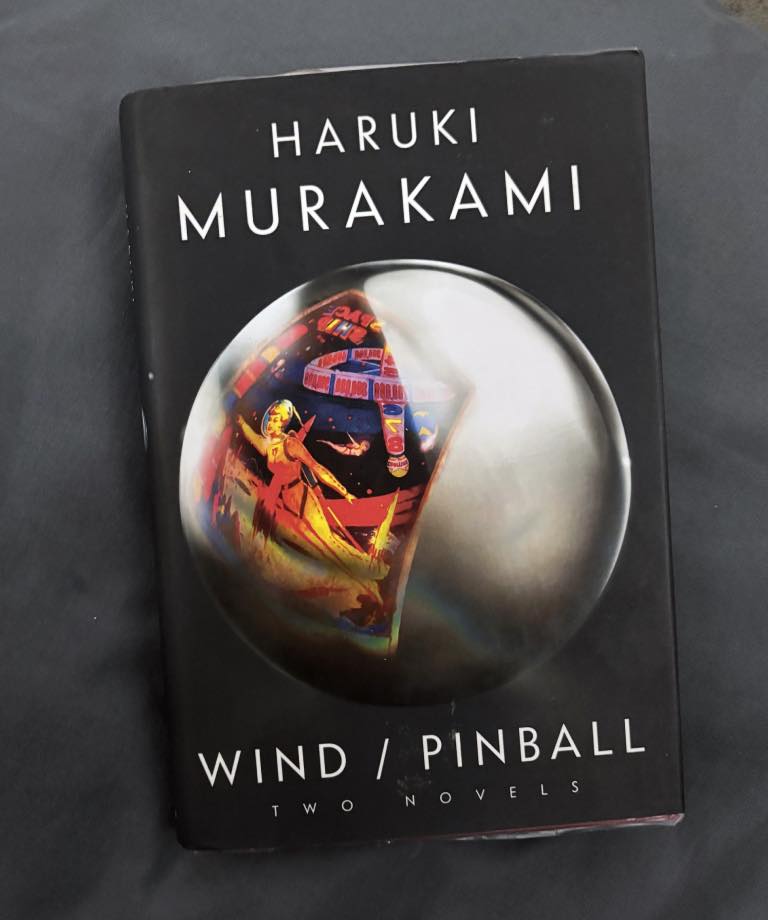
The reception of Pinball, 1973 leaves the question open. When the two novellas appeared in English in 2015, some readers found their incidents arbitrary or insubstantial, while others judged Pinball, 1973 the more assured of the two. That disagreement is understandable: the books share so much of their world—narrator, Rat, J’s Bar, elliptical structure, unresolved endings—that the usual question of whether a second book improves on its predecessor does not quite know where to attach itself. [The situation recalls Charles Frazier’s Thirteen Moons (2006), where a second book’s return to its predecessor’s materials similarly complicated the question of judgment—a case examined in the previous essay in this series.]
Outer Dark and the Repetition of a Place
The Orchard Keeper is set in a remote Tennessee community and moves among a bootlegger, a young boy, and an old caretaker. Outer Dark keeps the same kind of place while replacing the people and the story. The new figures are Rinthy and her brother Culla, and the story begins when Culla abandons the child born of their incest in the woods and tells Rinthy that it has died. The lie sends Rinthy into the world in search of the child; Culla, unable to remain still, follows a parallel and increasingly damned course through it. The setting is still Appalachian in its isolation and violence, continuous with the first novel’s rural darkness. What McCarthy repeats is the conditions the place carries, not the people who live in it.
Outer Dark repeats more than the place. Both novels press regional detail toward myth, but Outer Dark lets the mythic element take over more completely. The difference is what the violence does to the story. The Orchard Keeper holds its three figures in a loose structure, letting their lives converge gradually and obliquely rather than binding them to a single causal chain. Outer Dark takes a single act of violence and makes it the engine of everything that follows: Culla’s abandonment of the child sends Rinthy into the world and sends him running from it. The repetition is not of plot but of pressure. McCarthy took the atmosphere of the first book and tightened it around one event, and the tightening is what makes the second book feel like a different kind of novel built from the same materials.
Outer Dark is the colder of the two novels, and I mean that as praise. The Orchard Keeper still lets some warmth into its scenes; Outer Dark does not.
The reception of Outer Dark answered the question differently. The second book was read as an advance on the first, not a lesser version of it, and the difference lay in what the repetition accomplished. The Orchard Keeper had established a place and an atmosphere without quite finding the story that could carry them; Outer Dark found that story by tightening the same atmosphere around a single act of violence and letting the consequences run. The repetition of the place was the condition for the achievement, not a symptom of exhaustion. McCarthy drew on the material again because it had not yet been used to its limit.
Dead Babies and the Satire Amis Repeated
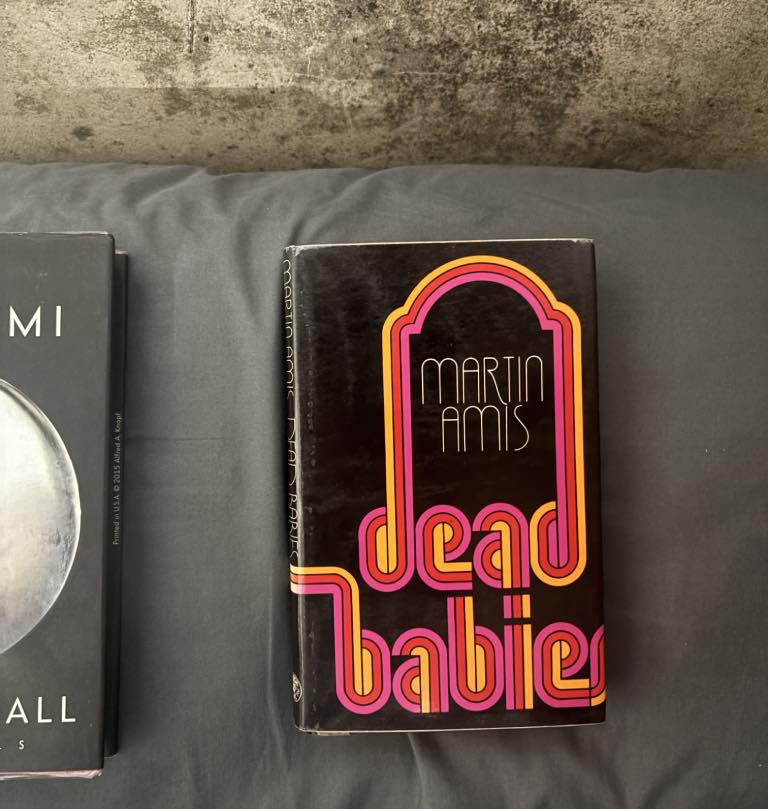
The Rachel Papers is a first-person account of a young man’s calculated pursuit of a girl, narrated by Charles Highway in a voice pleased with its own cleverness. The comedy comes from the gap between Charles’s estimation of himself and what the reader sees. Dead Babies keeps that apparatus and moves it to a weekend house party, where a group of privileged young people gather for drugs and sex. The targets overlap—youthful self-satisfaction, sexual appetite, and the ugliness beneath cultivated manners—but Dead Babies widens them into a broader satire of hedonism and privilege. What changes is scale—the first book had one narrator with one seduction; the second has a cast, a house, and a weekend.
Dead Babies is the only book in this essay I read slowly on purpose, and finished because I had promised myself I would. I don’t mean that as a critical judgment, but it’s probably the most honest thing I can say about it.
The difference from the other two cases is not that Amis repeated, because all three did. It is that Dead Babies adds scale without adding method: a larger cast, a country house, and a weekend, but not a new way of making the satire work. Compared to McCarthy who tightened The Orchard Keeper’s atmosphere around a single act of violence, and to Murakami who extended Hear the Wind Sing‘s narrator and world, Amis took up the satire of privilege again and found the same joke. The framework’s question—what the second book achieves that the first did not—finds only a diminishing answer here.
The repetition did not give the method more to work with. The Rachel Papers depends on Charles’s blindness to himself, while Dead Babies depends on its characters’ blindness to everything outside their appetites, and the broader target flattens what the first book had sharpened. The reception reached the same verdict. Kirkus found the satire forfeited to monotony, and later assessments placed Dead Babies near the bottom of Amis’s novels, citing a chaotic structure and the misogyny of its male characters. Amis himself called both early books “clumsy apprenticeship and unwarranted showing off.”
What the Three Cases Show
The first book imposes the terms, and repetition is one of them. Murakami and McCarthy each had something left to do with their debuts, though neither could have said in advance what it was. Amis’s debut, by contrast, had already given its satirical method its most complete form; Dead Babies shows what happens when a writer returns to material that cannot yield a new development. What matters is whether anything in the first book remains unresolved—whether its materials, forms, or pressures still contain a possibility the writer has not yet exhausted.
The next essay in this series turns to writers whose second books changed form rather than returning directly to the material of their debuts. Joan Didion moved from the novel to essays, James Baldwin from the novel to nonfiction, and Richard Wright from stories to a novel. Each change of form altered what their early concerns could become, and that change is what the next essay examines.
The Ordinary Artifice: Haruki Murakami’s Novelist as a Vocation
No Country for Old Men by Cormac McCarthy
The Zone of Interest by Martin Amis
The three older posts on the site deepen this essay by widening the view around each writer. “Novelist as a Vocation” shows Murakami describing his working habits and his commitment to a plain style, which is the style already visible in Hear the Wind Sing. “No Country for Old Men” follows McCarthy’s later interest in fate and violence, concerns that are present in Outer Dark without being its subject. “The Zone of Interest” shows Amis handling satire at a scale far beyond Dead Babies, which makes the earlier book’s narrowness more visible.
Further Reading
- Thoughts On Murakami’s First 2 Novels – No Spoilers Included on Reddit
- Why Outer Dark is Cormac McCarthy’s Best Novel by Write Conscious on YouTube
- The Flesh should have been Sade, it is only sad. by Book Around the Corner