Explore This Topic
My Reading Note
A writer’s second book has always interested me more than the first. The first arrives with nothing behind it, so whatever it does feels like an accident or a gift. The second has a predecessor, and the writer now has to decide what to do with it. Some continue in the same direction, while others change course. I wrote this series to examine eight different ways writers follow a debut, from confirming what came before to taking it somewhere new.
A writer’s first book is often an act of discovery. It introduces a voice, establishes a set of concerns, and gives readers their first sense of what that writer might become. The second book is different. By then, the writer is no longer entirely unknown, and the freedom of the debut has been replaced, at least to some degree, by expectations—from readers, publishers, critics, and perhaps the writer themselves. The second book therefore becomes more than simply another work. It can reveal how a writer responds to the success, limitations, or identity created by a debut.
There is no single way to follow a debut. Certain patterns emerge, and those patterns do not always reflect a conscious choice. A second book may deepen the concerns of the first, or it may leave them behind. It may become an opportunity to experiment or an opportunity to escape an identity that readers have already begun to associate with its author. In some cases, the relationship between the two books is obvious; in others, the distance between them is precisely what makes the second book revealing.
I have read second books that felt like they were written by the same author exploring the same themes, while others felt like they were created by an entirely different person. Both can be good. The intriguing question, to me, is not which one is better, but what the writer was actually doing.
This series looks at what happens in that space between a writer’s first book and whatever comes next. By examining how different writers approach their second books, we can see how literary voices develop, how expectations influence creative choices, and how authors respond when the work that first introduced them to readers is no longer the only measure of who they are. The second book may confirm what the debut promised, challenge it, or open a completely different path. These books offer a way of contemplating how writers grow, change, and discover new possibilities in their work.
What the Second Book Is For
Every second book is written under different circumstances. A writer may be following a successful debut and facing expectations the first book never had to meet. Another may be working in relative obscurity, with little indication that the first book mattered to anyone. Most writers likely find themselves in a state of uncertainty, unsure of the impact their debut has had or the requirements for their next book.
The eight patterns in this series fall across those circumstances. Some writers found themselves answering to expectations, while others had the freedom to begin again. For some, years passed before a second book appeared; for others, the second book arrived only after the writer’s career had effectively ended. The circumstances differ, but they all raise the same question: what does a writer do when the first book is no longer the only thing that can be judged?
The debut tells us what a writer can do. The second book tells us how the writer responds to what that first act has produced. That response may reveal continuity or change, confidence or uncertainty, but it always gives us something the debut could not: a writer looking back, however consciously, at what came before. That is what makes the second book worth reading on its own terms and what this series sets out to examine.
I did not set out to argue that the second book matters more than the first. I only noticed, after reading enough of them, that the first book is often where writers show what they hope to be, while the second is where they begin to show what they actually are.
How the Series Uses the Word “Book”
The series examines a writer’s first and second books, using “book” in its broadest sense. A novel counts, but so does a story collection, a volume of poems, a book of essays, or a memoir. The first book is whatever the writer published first, and the second is whatever came next, regardless of form.
The form can itself be part of the story. A writer who follows a novel with a collection of essays has made a different move from one who follows a novel with another novel, and the shift can signal a change in subject, method, or literary ambition. The series allows for these differences rather than treating all second books as though they belong to the same literary category.
Lastly, the sequence is treated strictly throughout the series. A second novel is not necessarily a writer’s second book, and a later work does not become the second simply because it became more important to the writer’s reputation. What comes next after the debut is the book this series is interested in, because that is the book that has to answer first for what came before.
The Articles in This Series
The eight essays in this series examine different ways writers follow a debut. Each brings together three writers whose second books offer useful points of comparison. The patterns overlap, and some writers could reasonably appear in more than one essay, but the categories hold well enough to be useful. What follows is a brief account of each.
- When the Follow-Up Falls Short: Charles Frazier, Donna Tartt, and Norman Mailer each followed a highly successful debut with a second book that faced expectations the first had created. This essay examines what happens when a second book is judged against a debut that has already set a difficult standard to meet.
- When the Debut Is Forgotten: Salman Rushdie, Jack Kerouac, and Malcolm Lowry each published a first book that made little lasting impression before a second book transformed their reputations. This essay examines what the second book can do when it gives a writer the recognition the debut failed to secure.
- When the Second Book Confirms: Jane Austen, Toni Morrison, and Alice Munro each followed a debut that had already revealed something distinctive with a second book that developed those qualities further. This essay examines how a second book can confirm the promise of a first without simply repeating it.
- When the Second Book Repeats: Haruki Murakami, Cormac McCarthy, and Martin Amis each returned in their second books to elements already present in their debuts, sometimes so closely that the later work can feel like another attempt at the same territory. This essay explores the significance of repetition for a writer who is still navigating their path.
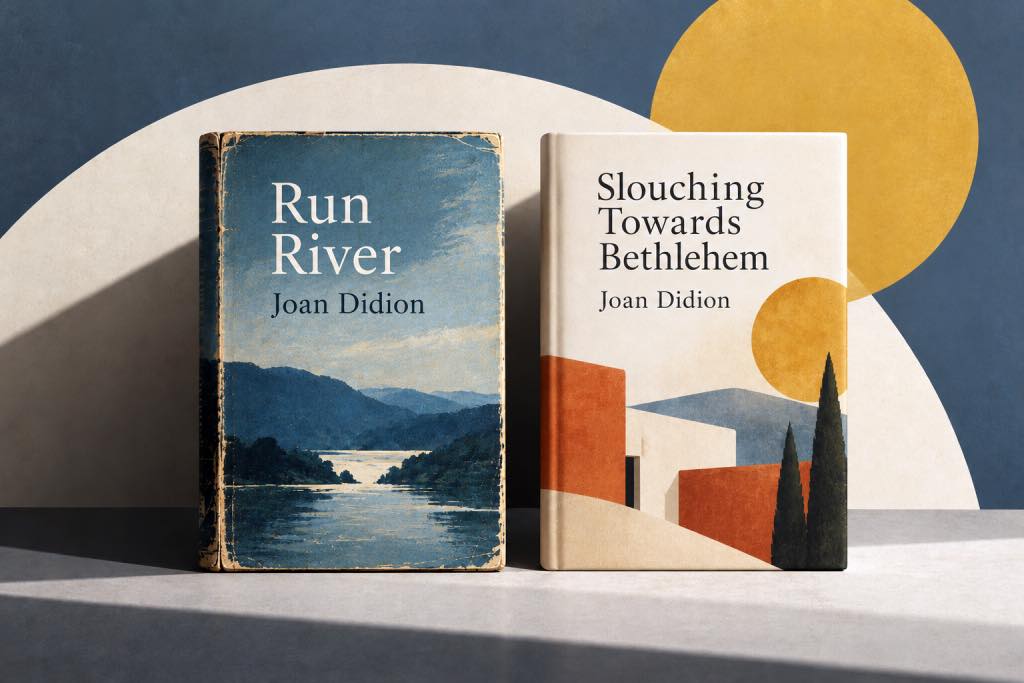
- When the Second Book Departs: Joan Didion, James Baldwin, and Richard Wright each followed a first book with a second that changed direction, including significant shifts in form. Didion moved from a novel to essays, Baldwin from a novel to nonfiction, and Wright from a collection of stories to a novel. This essay examines what a change in form can reveal about a writer’s developing voice.
- When the Second Book Takes Its Time: Junot Díaz, Jeffrey Eugenides, and Edward P. Jones each left substantial gaps between their first and second books. This essay examines what happens when the follow-up takes years to arrive and how the intervening time can become part of the story of the second book.
- When the Second Book Is Overshadowed: Kazuo Ishiguro, Colson Whitehead, and Rohinton Mistry each published second books that were successful and critically recognized in their own right, only to have later work become more closely associated with their names. This essay examines how a second book can succeed without becoming the book a writer is ultimately known for.
- When the Second Book Shouldn’t Have Been: Harper Lee, John Kennedy Toole, and Harold Sonny Ladoo each have second books whose circumstances raise questions about whether they should have appeared at all. Manuscripts written before or outside the writers’ established careers, works published after their deaths, and unfinished or previously rejected material complicate the idea of what a second book is. This essay examines what happens when the second book arrives under circumstances that make its very existence part of the story.
Some of these cases made me hesitate. A writer’s second book can point in one direction while the rest of the career points somewhere else, and a book’s place in a bibliography does not always match its place in a writer’s reputation. I have kept the categories tied to the second book itself, even when the larger story is more complicated.
The second book is where the writer’s relationship with the debut becomes visible. Sometimes it confirms what came before, sometimes it pushes against it, and other times circumstances make the comparison stranger than either book could have anticipated. Whatever the outcome, the second book gives us something the first cannot: the beginning of a conversation between a writer and their own work.
How Does Voice Relate to Form? Three Orientations of a Writer’s Style
The Reader’s Energy Budget: Cognitive Demand and the Spectrum of Reading Difficulty
Two older posts on this site strengthen the case this series makes. The essay on “Voice and Form” distinguishes writers who refine a stable voice from those who vary the structure around it, and it considers what readers want from a writer across a career. That question is the same one this series pursues, only focused on a single moment: the second book, where the writer’s relation to their own voice first comes under pressure. The post on “The Reader’s Energy Budget” treats reading as a finite resource, a matter of how much cognitive demand a book makes and how much a reader is willing to spend. Reading the two together gives the series its full frame. The second book is where the writer’s voice is tested, and the reader’s willingness to follow it is what the test ultimately depends on.
Further Reading
- What I Wish I’d Known About: Second Books by Kill Your Darlings