My Reading Note
I spent last month working through Viet Thanh Nguyen’s The Sympathizer for the third time, and what finally cracked open the novel for me was its epigraph—a Nietzsche passage about torture that I had skimmed in my first two readings.
An epigraph is a quotation, a line of poetry, or a fragment of text placed before a book’s main narrative or at the head of a chapter. This definition of an epigraph begins with its Greek roots: the term joins epi- (“on” or “upon”) with graphein (“to write”). An epigraph is literally a writing placed upon writing, a foreign object lodged at the threshold of a text.
Unlike a preface, which explains the author’s intentions, or a dedication, which honors a relationship, the epigraph need not connect to the story at all. It belongs to someone else—another writer, a historical figure, an anonymous tradition—and its presence announces that this new work exists in relation to what came before.
The Three Functions of an Epigraph
Writers select epigraphs to serve one of three distinct purposes in relation to the text that follows. These purposes are not mutually exclusive; a single epigraph can work in multiple ways. But understanding them as separate categories clarifies what the author is asking of the reader.
The Epigraph as Lens
A lens epigraph provides interpretive equipment. It offers a concept, an image, or a question that the reader carries forward into the narrative. This is the most common function and the one most readers intuitively recognize.
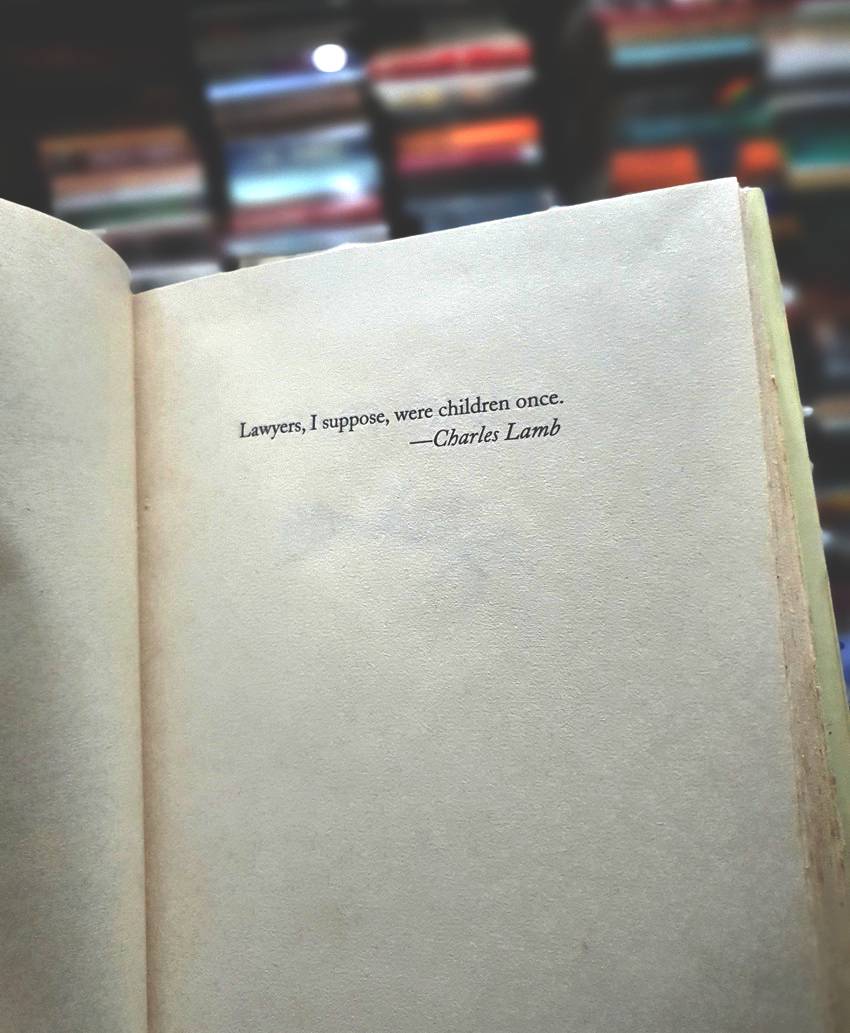
Harper Lee’s To Kill a Mockingbird (1960) opens with Charles Lamb’s observation: “Lawyers, I suppose, were children once.” The line does not describe the plot or summarize the theme. Instead, it establishes a double vision that the novel requires: Atticus Finch must be seen simultaneously as the adult lawyer defending Tom Robinson and as the child who once inhabited a world before prejudice calcified into law. The epigraph asks readers to hold these two perspectives together, to see the man through the boy he was.
The Epigraph as Frame
A frame epigraph encloses the narrative within a specific context. It tells readers what kind of story this is by locating it within a tradition, a historical moment, or a philosophical problem. The frame does not interpret the story so much as it establishes the ground on which interpretation will occur.
Ernest Hemingway’s The Sun Also Rises (1926) uses two epigraphs. The first, Gertrude Stein’s “You are all a lost generation,” pins the novel to a specific historical claim about the post-war generation. The second, a long passage from Ecclesiastes, lifts the novel out of that historical moment and places it within a cyclical view of human time. The two frames together—one historical and specific, one biblical and universal—create the space in which the novel’s characters move. They are lost in history but eternal in their futility.
The Epigraph as Antagonist
An antagonist epigraph pushes against the narrative. It offers a perspective that the story will challenge, complicate, or refuse. This function transforms the epigraph from a guide into an adversary, and the reader’s task becomes one of watching the narrative struggle with its opening gambit.
F. Scott Fitzgerald’s The Great Gatsby (1925) uses a stanza from Thomas Parke D’Invilliers’s poem about a gold-hatted lover who bounces high to win his beloved. The poem advocates performance, the manipulation of appearance to secure affection. What follows is the story of Jay Gatsby, who performs exactly this role through lavish parties, imported shirts, and the green light. His performance fails utterly to win Daisy. Instead of introducing the novel’s theme, the epigraph states a proposition that the novel exists to disprove.
How This Distinction Emerged
This three-function model did not originate in literary theory but from a practical problem: existing definitions of the epigraph could not account for what certain quotations actually did inside particular books.
Standard accounts treat the epigraph as a tone-setter or thematic preview. This description holds for some novels but not for others. Mary Shelley’s Frankenstein (1818) opens with a passage from Paradise Lost in which Adam complains to God. The lines do not establish a mood but pose a question the novel will explore from multiple angles: Is the creature Adam, rebellious and abandoned? Is Victor God, irresponsible and absent? Is the reader positioned as the deity who must judge both? Instead of setting a tone, the epigraph introduces a framework of relations that the narrative will test across every character and encounter.
A different problem emerged with antagonist epigraphs. Fitzgerald’s The Great Gatsby uses a stanza about a gold-hatted lover who bounces high to win his beloved. The poem advocates performance as a strategy for securing affection, and the novel demonstrates the failure of this strategy. Existing definitions, which assumed alignment between epigraph and text, could not explain what Fitzgerald was doing. This is because the epigraph, rather than introducing the novel’s themes, asserts a proposition that the novel seeks to refute.
Most critics treat the Gatsby epigraph as ironic commentary on Gatsby’s methods, but I have always felt this interpretation lets the novel off too easily. The epigraph’s speaker is not wrong that performance can win love. The novel’s tragedy is that Gatsby’s particular performance, pitched to a woman who was never his audience, fails despite being the right performance for someone else.
A Taxonomy of Epigraph Sources
The source of an epigraph performs its own work on the text. Readers judge the epigraph by its content and by its origin.
- Literary epigraphs draw from other writers and texts, including fiction, poetry, drama, scripture, and philosophy. They often signal a new book’s participation in a literary tradition and can ask readers to hold two texts in relation. Zadie Smith’s White Teeth (2000), for instance, opens with the line “What’s past is prologue” from Shakespeare’s The Tempest, foregrounding questions about how colonial and familial pasts appear in contemporary London’s multicultural neighborhoods.
- Historical epigraphs use documents, speeches, letters, or words from historical figures. They ground the narrative in actual events and claim a relationship to historical truth. Ariel Lawhon’s I Was Anastasia (2018) opens with Rudyard Kipling’s observation: “If history were taught in the form of stories, it would never be forgotten.” The epigraph frames the novel’s method: approaching the mystery of Anna Anderson through narrative rather than documentary evidence alone.
- Philosophical epigraphs borrow from thinkers and theorists. They announce the book’s intellectual stakes and ask readers to consider abstract questions alongside narrative events. Albert Camus’s The Plague (1947) opens with Daniel Defoe’s observation that representing one kind of imprisonment by another is reasonable. The epigraph licenses the novel’s allegorical method: the plague in Oran stands for the Nazi occupation of France.
- Anonymous epigraphs (proverbs, folk songs, traditional sayings) claim a different kind of authority. They speak not from individual genius but from collective wisdom, from what “everyone knows.” This anonymity can be deceptive. The epigraph to J.R.R. Tolkien’s The Lord of the Rings (1954–55) is a verse “of hobbit-lore” that Tolkien himself invented. The appearance of tradition masks an individual act of creation.
The source determines what kind of work the epigraph can do and which readers can follow where it leads. A reader who recognizes the Shakespeare allusion gets more from Smith’s opening. A reader familiar with Defoe’s Robinson Crusoe (1719) brings something to Camus that other readers lack. The epigraph rewards familiarity.
The Reader’s Work
Readers encounter epigraphs at a moment of maximum vulnerability. They have not yet entered the narrative, have not yet committed to the characters, and have not yet learned the rules of this fictional world. The epigraph arrives in this empty space and makes its claim.
After reading the entire book, some readers go back to the epigraph. This second reading transforms the epigraph from a prediction into a retrospection. The line that seemed merely suggestive now contains the completed narrative. Returning to Hemingway’s Ecclesiastes epigraph in The Sun Also Rises after Jake Barnes’s earlier swim in the sea at San Sebastián reveals that the epigraph concerns not the characters themselves, but the relentless structure of time that ensnares them.
This recursive reading is not optional for certain books. The epigraph of Toni Morrison’s Beloved (1987) quotes Romans 9:25: “I will call them my people, which were not my people; and her beloved, which was not beloved.” The sentence cannot be fully parsed at first encounter. Who speaks? To whom? About whom? Only after reading the novel, after understanding Sethe’s relationship to her murdered daughter, and after recognizing the community’s relationship to the haunted house on Bluestone Road, can the reader return to the epigraph and hear it as a promise made possible only by the story that fulfills it.
On The Sympathizer’s Epigraph
The Nietzsche epigraph comes from On the Genealogy of Morals (Zur Genealogie der Moral, 1887), a text about how the powerful define what counts as good:
Let us not become gloomy as soon as we hear the word “torture”: in this particular case there is plenty to offset and mitigate that word—even something to laugh at.
The novel’s narrator, a communist spy in the South Vietnamese army, occupies exactly this position: he is always performing for audiences who define the terms of performance. The epigraph does not introduce the novel’s theme but its method. Nietzsche’s discussion of torture as something that might contain “something to laugh at” becomes legible only when the reader recognizes that the narrator’s entire confession—the book we hold—is itself a performance of that principle. He is making us laugh at torture and, in laughing, implicating us in the system that makes torture possible.
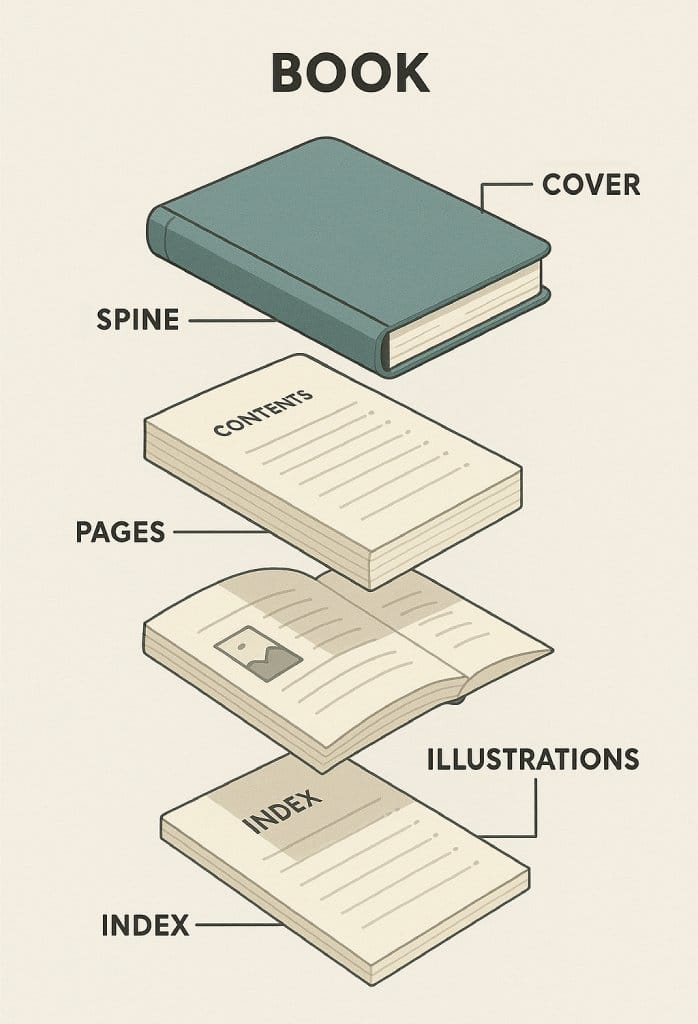
I picked these two articles from the archive because they establish the groundwork that this epigraph article requires. The guide to “Parts of a Book” introduces the epigraph’s physical location among other front-matter elements. The piece on “Front Matter” distinguishes the epigraph from related elements like the preface, foreword, and prologue, giving the reader the conceptual clarity needed before asking what an epigraph actually does.
Editor's Note: This article was originally published on October 28, 2024. It was substantively revised on February 26, 2026 for depth, clarity, and updated research methodology to ensure the highest standard of literary analysis.
Further Reading
On Epigraphs by Andrew Tutt, The Millions
Why you should always read the epigraph by Michael Delgado, Penguin Random House UK
Epigraphs: opening possibilities by Toby Lichtig, The Guardian
Towards the Heart of a Book: In Praise of the Epigraph by Thomas Swick, Literary Hub
Why Are You Really Quoting Another Writer? The Epigraph as both hero-worship and laziness by Alexandra O’Connell, alexoconnell.com