My Reading Note
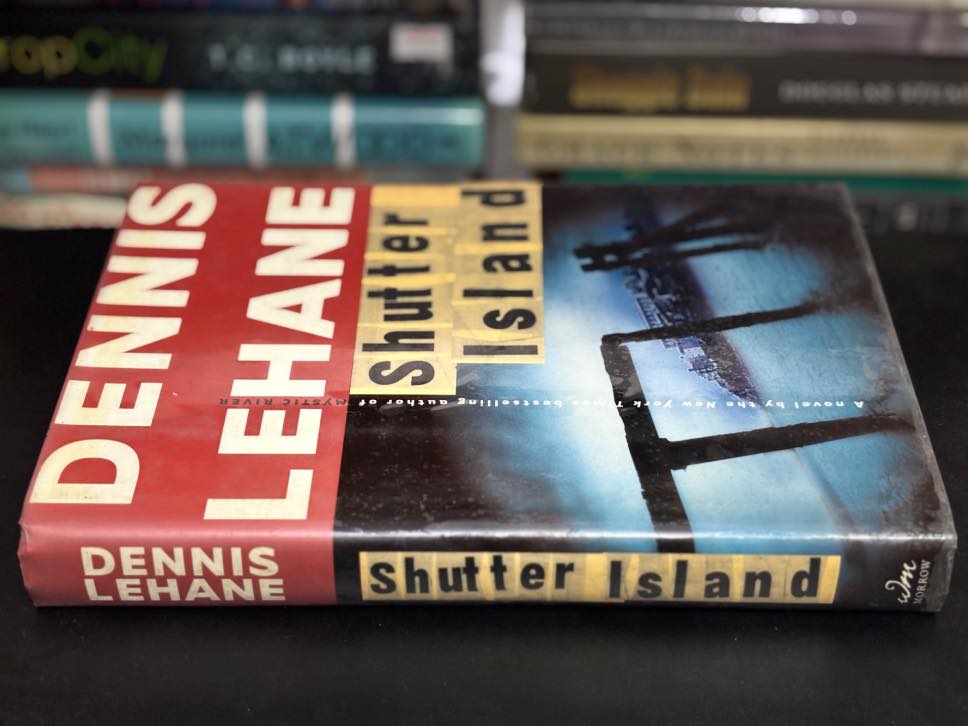
The first time I read Shutter Island, I finished it annoyed, convinced the ending was a gimmick. Years later, I picked it up again, already knowing how it turned out, and found myself affected in ways I had not expected. The book worked on me even when I knew what was coming. This article is about how I came to understand why that happened.
Dennis Lehane’s Shutter Island (2003) has sold millions of copies and has been adapted into a major film by Martin Scorsese. It is typically described as a psychological thriller with a shocking final twist, and readers approach it as a puzzle to be solved. This reading treats the novel as a problem with a solution, a code with a key.
But the novel does something more interesting. It constructs a reading encounter that mirrors the experience of its protagonist. Teddy Daniels does not simply lose his grip on reality; the reader is placed in the same position where reality becomes difficult to locate. The question is how. What specific techniques does Lehane use to transfer doubt from the page into the mind of the reader?
This article traces five mechanisms through which the novel produces this effect: (1) setting as spatial trap, (2) narrative structure as temporal disorientation, (3) narrative pacing as rhythmic control, (4) point of view as information filter, and (5) supporting characters as unreliable sources. Each mechanism functions independently, but together they create a single experience: the reader’s gradual loss of certainty.
Setting as Spatial Trap
The novel’s location is often described as atmospheric, a Gothic backdrop that enhances the mood. This description captures its surface but misses its function entirely. Because the setting does more than surround the story; it structures what the reader can know.
Ashecliffe Hospital dominates the island with its stone walls, barred windows, and locked wards. These features create a spatial hierarchy that maps directly onto the flow of information. When Teddy cannot enter a ward, neither can the reader. When he is denied access to certain floors, so is the reader. The hospital’s architecture becomes an information filter that permits only what Teddy encounters.
The island’s geography reinforces this constraint. Surrounded by treacherous waters, cut off from the mainland by weather and distance, it offers no external reference point. In a conventional novel, the reader might step back from the protagonist and compare his perceptions against an objective world. Here, no such world exists within the narrative. We have only what the island lets us see.
The lighthouse stands primarily as the setting’s most concentrated mechanism. It appears throughout the novel as a fixed point, visible from many locations, yet inaccessible until the final scenes. For Teddy it promises clarity, and for the reader it promises resolution. When he finally enters it, we enter with him. What we find is not the truth we expected but the end of certainty. The lighthouse delivered us to the end of the search instead of to answers.
I noticed on a second reading how often Teddy moves through corridors, stairwells, and transitional spaces. He is always between locations, never arriving anywhere that feels final. The setting keeps him in motion, and the reader moves with him, always expecting the next room to provide solid ground, but it never does.
Narrative Structure as Temporal Disorientation
The novel’s narrative structure does more than build suspense. It actively disorients the reader’s experience of time, placing us inside Teddy’s consciousness rather than simply observing it from the outside.
Lehane constructs the timeline through flashbacks that merge with the main storyline. These shifts are not clearly marked. The reader moves from the present investigation to Teddy’s war memories or his memories of his wife without obvious transitions. This technique forces us to share Teddy’s experience of time: the past does not stay in the past but appears in the present without clear separation.
The flashbacks serve another function. They layer information in ways that the reader cannot immediately evaluate. When Teddy recalls his wife or his experiences liberating Dachau, we have no way to verify these memories. They come to us through his consciousness, filtered by his perspective and conditioned by his trauma. The novel offers no objective account of these events, only Teddy’s version, and we must decide whether to trust it without any external check.
On first reading, I accepted Teddy’s memories as true because the novel gave me no reason to doubt them. On second reading, knowing the ending, I saw how carefully Lehane had constructed those memories to reveal Teddy’s condition without ever stating it directly. The memories are accurate to what Teddy believes. They are not accurate as to what happened.
Narrative Pacing as Rhythmic Control
Lehane controls the speed of information delivery with precision through short chapters that dominate the novel. Many run only a few pages and end on notes of uncertainty or dread, creating a reading rhythm that feels urgent and never allows the reader to settle into extended scenes. This fragmentation matches Teddy’s agitated mental state and transfers that agitation to the person turning the pages.
The novel also varies sentence length within chapters to regulate micro-level pacing. Action sequences unfold in short, staccato sentences that accelerate the reading experience while moments of reflection or dread stretch into longer constructions that slow the reader down. These shifts happen without clear signals, so the reader must adjust continuously to changing speeds just as Teddy adjusts to shifting perceptions.
At the macro level, the approaching hurricane functions as a pacing mechanism that creates a sense that events must conclude before the storm arrives. This temporal pressure affects the reader as much as Teddy. We feel the urgency increase with each chapter, but the narrative rarely provides closure. It raises new questions instead. Before we evaluate what happens, we have already been conditioned by how fast it happens.
I noticed on a second reading how often chapters end with a question, a doubt, or a piece of information that contradicts what came before. The pacing forces you to keep going and turn the page, hoping to find resolution. But the next chapter rarely provides closure and raises new questions instead.
Point of View as Information Filter
The novel confines the reader to Teddy’s perspective from the first page to the last. We only see what he sees, hear what he hears, and learn what he learns. This restriction is the most direct mechanism through which Lehane transfers doubt from the character to the reader, primarily because no external viewpoint enters to verify or correct Teddy’s perceptions. When he misreads a situation, we misread it with him.
The technique becomes most powerful in scenes where other characters seem to know more than they reveal. Dr. Cawley speaks in ways that suggest hidden knowledge, and Chuck makes remarks that could be interpreted as clues or as casual comments. The reader, trapped inside Teddy’s perspective, has no way to determine which interpretation is correct. We share his uncertainty because we share his information.
On first reading, I flagged every comment from Cawley and Chuck as evidence of conspiracy. On second reading, knowing they were telling the truth, I saw how carefully Lehane had constructed their dialogue to work both ways. The words are the same either way. The meaning depends entirely on what the reader believes about who is speaking.
The novel also withholds access to other characters’ interiority. We never know what Cawley thinks, what Chuck really believes, or what the patients actually experience. They remain opaque, visible only from the outside, their motives accessible only through interpretation. This opacity mirrors Teddy’s position: he must guess at what others think, and we must guess with him. The point-of-view restriction reaches its limit in the final scenes, where the truth forces a complete reassessment of everything we have seen.
Supporting Characters as Unreliable Sources
Spoiler Warning: The following analysis discusses the novel’s plot in detail, including its ending and final reveal. If you have not finished the book and wish to avoid spoilers, you may want to stop here.
Dr. Cawley speaks with an authority that seems trustworthy, yet his words always carry a second possible meaning. When he insists Teddy should trust him, the statement could be genuine concern or manipulative control. The reader, confined to Teddy’s perspective, cannot decide which. Cawley becomes a source of uncertainty rather than clarity.
Chuck presents a different problem. He seems supportive and equally suspicious of the hospital’s operations, and his remarks reinforce Teddy’s conspiracy theories. But he also makes comments that, in retrospect, reveal his true role as Dr. Sheehan, Teddy’s primary physician. The reader cannot distinguish between Chuck as ally and Chuck as therapist because the novel offers no external check. We trust him because Teddy trusts him, and we are wrong for the same reasons.
The moment that stuck with me after the second reading was Chuck’s line about how Teddy should consider the possibility that he might be a patient. On first reading, it seemed like a joke. On second reading, it was the plain truth stated directly. The words had not changed. My ability to hear them had.
The patients function as the most opaque information sources. Rachel Solando exists only through others’ descriptions, and George Noyce could be a truth-teller or a paranoid patient. The novel provides no way to adjudicate. Each character we encounter could be delivering vital information or feeding delusion, and the reader must evaluate without criteria. Every voice could be truth or deception, and the novel refuses to tell us which. We are left sharing Teddy’s fundamental dilemma: when no source can be trusted, trust becomes impossible.
The Experience of Uncertainty
Each mechanism examined in this article traps the reader inside Teddy’s condition from a different angle. The setting removes external reference points. The narrative structure blurs the temporal distance between past and present. The point of view denies access to any consciousness but Teddy’s. And the supporting characters offer information without verification. Together, they seal the reader inside a system where certainty cannot be achieved.
This condition explains why the novel works even after the ending is known. The twist reveals the truth about Teddy’s identity, but it does not undo the experience of reading it again. The doubt we felt, the uncertainty we inhabited, and the moments when we misread characters or misinterpreted events—these remain part of our encounter with the book. We cannot read it again for the first time, but we can read it again with awareness of how it worked on us.
A long time ago, someone told me he envied people who had not yet read Shutter Island because they could still experience the ending with a fresh mind. But I disagreed. The ending is the least interesting thing about the book. The sustained uncertainty and gradual loss of confidence in one’s own reading are what matter, and they work whether you know the ending or not.
What the novel accomplishes is the transfer of a psychological state. Teddy’s paranoid uncertainty becomes the reader’s paranoia through the coordinated work of these narrative mechanisms. We do not merely observe someone who cannot trust his perceptions. We are placed in the same position and forced to interpret events without sufficient information. By the time the truth arrives, we have already inhabited the uncertainty.
Selected Passage with Analysis
“Believe it or not, Marshal, I believe in talk therapy, basic interpersonal skills. I have this radical idea that if you treat a patient with respect and listen to what he’s trying to tell you, you just might reach him.”
Another howl. Same woman, Teddy was pretty sure. It slid between them on the stairs and seemed to spike Cawley’s attention.
“But these patients?” Teddy said.
Cawley smiled. “Well, yes, many of these patients need to be medicated and some need to be manacled. No argument. But it’s a slippery slope. Once you introduce the poison into the well, how do you ever get it out of the water?”
Page 87, Shutter Island by Dennis Lehane
In this passage, the themes of mental health treatment and the dichotomy between humane therapy and the need for control are central. Dr. Cawley's advocacy for talk therapy reflects a more compassionate approach to psychiatric care. Conversely, Teddy’s skepticism points to a historical context where physical restraint and medication were often the default responses to mental illness.

The dialogue reveals Cawley’s commitment to ethical treatment against Teddy’s more militaristic viewpoint. This contrast illustrates their differing motivations: Cawley seeks to genuinely connect with patients, while Teddy appears wary of the system's potential for abuse. The howling of a patient in the background amplifies the tension, symbolizing the chaos within the asylum and foreshadowing the darker realities of psychiatric care.

Overall, this exchange encapsulates broader themes of the novel, including the moral complexities of mental health treatment, the struggle between control and compassion, and the blurred lines between sanity and madness. It serves as a microcosm of the ethical dilemmas faced in the care of the mentally ill.
Editor's Note: This article was originally published on October 27, 2024. It was substantively revised on March 7, 2026 for depth, clarity, and updated research methodology to ensure the highest standard of literary analysis.
Further Reading
Shutter Island by Dennis Lehane by Valeria Macewan, Pop Matters
The Deception of Shutter Island [spoilers] by StoryFix
Martin Scorsese’s ‘Shutter Island’ Makes a Huge Change to the Book’s Ending [spoilers] by Samantha Graves, Collider
Shutter Island: The Book Vs. The Movie [possible spoilers] on Reddit