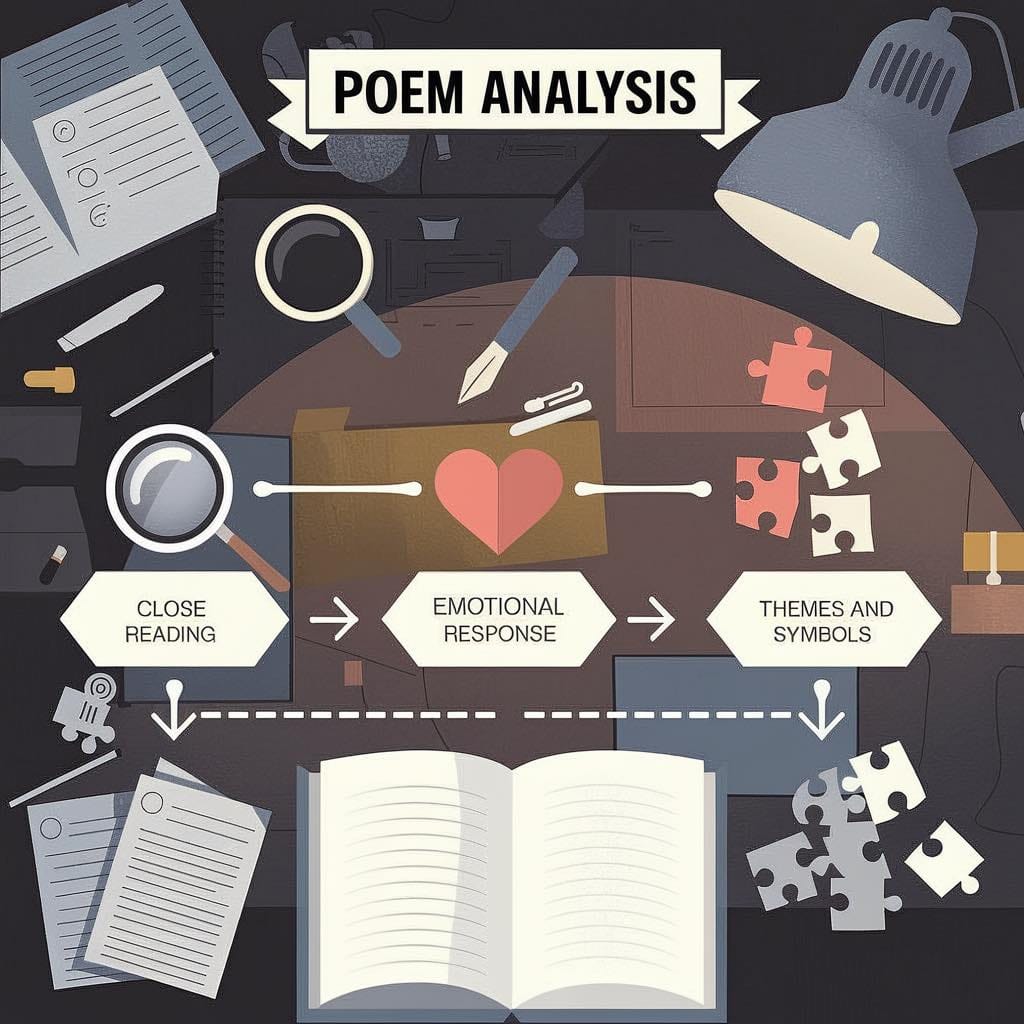
Poem analysis is the practice of examining a poem’s language, form, and stylistic features to uncover its hidden workings. It requires a focused look at how rhythm, rhyme, and visual details interact to create the overall effect of the piece. By studying elements such as word choice, structure, and sound, you begin to see how each part contributes to the work’s overall impact.
This guide offers a systematic approach to exploring poetry. By breaking a poem into its fundamental parts, from language and form to imagery and symbolism, you discover the poet’s choices and intentions. Whether you are a student, a scholar, or someone who cherishes expressive writing, these strategies provide a clear pathway to appreciating the craftsmanship embedded in every line.

Importance of Analyzing Poetry
Analyzing poetry not only deepens one’s admiration for the craft behind every verse but also clarifies the poet’s intentional design. By closely examining sound devices, such as the strategic use of alliteration, and noticing shifts in structure, one uncovers how the poet manipulates language to create effect. For example, the repetition of the “s” sound in a line can evoke a sense of tranquility or, in a different setting, introduce an element of tension.
Consider a poem where a falling leaf symbolizes isolation. The interplay between movement and stillness forms a striking visual image that reveals much about the poet’s technique. Analyzing examples like George Gordon Byron’s The Destruction of Sennacherib (1815) and Claude McKay’s Harlem Shadows (1922) illustrates how specific devices such as interlocking meter, precise rhyme, and symbolic language work together to present themes of drama, struggle, and perseverance.
Additionally, the way stanzas are organized and the form chosen, whether adhering to the disciplined structure of a sonnet or embracing the freedom of free verse, reinforces the central message of the poem. This attentive exploration of technical elements not only enhances engagement with the poem but also illuminates the specific decisions that give the work its distinctive character.

Key Elements in Poem Analysis
- Structure and Form: The arrangement of lines and stanzas creates a framework that influences the flow of the poem. A form like a sonnet often adheres to strict rules, such as the use of iambic pentameter, that can heighten the impact of the message. By contrast, free verse might offer a more spontaneous feel. The physical layout of the poem is always a conscious choice that amplifies its overall effect.
- Language and Imagery: Poetry is constructed from words. Vivid images and comparisons generate sensory impressions within the text. Consider a simile that likens nervousness to “a feather adrift in the wind.” This comparison immediately conveys a fragile condition. The specific choice of adjectives and verbs forms a potent visual scene.
- Tone and Intonation: The poet’s choice of language establishes the work’s mood. Specific sound patterns and rhythms influence how the piece is perceived. Variations in intonation ensure that the poem remains engaging and thought-provoking throughout by highlighting moments of contemplation or urgency.
- Symbolism and Themes: Recurring symbols provide a window into the broader ideas the work addresses. Whether the focus is on love, loss, or transformation, these elements serve as anchors for the text’s central message. Recognizing how such symbols function helps clarify what the poet intends to express.

Techniques for Effective Poetry Analysis
- Use of literary devices: Examine how metaphors, similes, and personification contribute to the work’s impact. In T. S. Eliot’s “The Love Song of J. Alfred Prufrock” (1915), for example, urban imagery conveys the inner state of the speaker, which highlights the contrast between a monotonous existence and the desire for something more vivid. These devices are essential for conveying complex ideas succinctly.
- Examining poetic devices: Analyzing the metric structure and the arrangement of stresses in a line can reveal the calculated rhythm behind the poem. A Shakespearean sonnet, for instance, relies on the regular beat of iambic pentameter that lends the verse a musical quality. Recognizing these formal choices can clarify how they support the work’s central message.
- Analyzing speaker and audience: The interaction between the poem’s voice and its intended audience is a central factor in interpretation. In “Prufrock,” the speaker’s introspective dialogue conveys hesitation and self-reflection. Paying attention to this dynamic can illuminate the personal perspective embedded within the poem.

Steps to Analyze a Poem
- Examine the poem’s title
The title often offers an initial hint about the subject matter. In Robert Frost’s “The Road Not Taken” (1916), for example, the title suggests the impact of choices. Reflect on the title before moving on to the rest of the text to form an initial connection with the poem. - Interpret the literal meaning
Begin with a straightforward reading to capture the plain depiction or scene the poem presents. Reading aloud can reveal the auditory qualities of the verse. Focus on identifying the setting, characters, and actions described. This step lays the groundwork for a more detailed exploration of the text. - Explore poetic structure
Analyze the organization of the poem by noting the number of stanzas, line lengths, and overall rhythm. Whether the poem follows a traditional form like a sonnet or opts for the freedom of free verse, the structure is an intentional choice that determines how the content is conveyed. - Investigate language and imagery
Pay close attention to the poet’s word selection. Metaphors, similes, and vivid images work together to form a striking picture. Consider William Shakespeare’s opening question, “Shall I compare thee to a summer’s day?” which employs natural imagery to create a clear visual impression. Each figurative expression contributes to the work’s atmosphere. - Determine tone and mood
Diction and syntax play a significant role in establishing tone. A poem might evoke a somber, reflective mood or a buoyant, energetic one. By identifying these qualities, you can discern the emotions the poet wishes to convey. - Identify theme and message
Look for recurring symbols or motifs that hint at larger ideas about life, love, or other universal topics. In the work of Emily Dickinson, themes of mortality often emerge through understated imagery and purposeful word choice. Noting these elements helps reveal the work’s central focus. - Examine rhythm and rhyme
Assess the musical qualities of the poem by examining its meter and rhyme scheme. A steady rhythm can create a sense of harmony, while irregular patterns might mirror chaos or uncertainty. The strategic use of sound and pause plays a pivotal role in the poem’s progression.
Example Analysis of Key Poems

Robert Frost’s “The Road Not Taken”
The title immediately suggests a focus on choices and their consequences. It encourages the reader to consider the impact of decisions and the roads we choose in life. At face value, the poem describes a traveler in a yellow wood who must decide between two diverging paths. This straightforward narrative of a journey establishes the metaphor for decision-making in life.
The poem is composed of four stanzas of five lines each. Its regular structure and rhyme scheme help create the contemplative nature of the speaker’s decision, as the form mirrors the methodical process of choosing one path over another. Vivid imagery, such as the depiction of a “yellow wood” and the contrasting roads, creates a visual representation of choices. The language is simple yet evocative, drawing the reader into the reflective atmosphere of the piece.
The tone is thoughtful and introspective, with a touch of wistfulness as the speaker considers the consequences of his choice. The mood is both contemplative and slightly melancholic. This quality reflects on how different choices mold one’s life. The steady rhythm and consistent rhyme scheme provide a meditative beat. This beat mirrors the internal debate of the speaker and emphasizes the structured yet unpredictable nature of life’s choices.
The central theme of the poem is the inevitability of choices and the irreversible nature of decision-making. The work suggests that the paths we take define who we are, even if we cannot know the outcome of the road not chosen.

Percy Bysshe Shelley’s “Ozymandias”
The title references Ozymandias (the Greek name for an ancient Egyptian ruler), hinting at themes of power, legacy, and inevitable decline. The poem describes the discovery of a ruined statue in a vast desert, a remnant of a once-mighty king whose empire has crumbled into oblivion. Although brief, the poem’s near-sonnet form with a defined volta mirrors the rise and fall of Ozymandias’s reign. This compact structure emphasizes the transient nature of power and glory.
Shelley uses striking imagery to contrast the grandeur of the past with the desolation of the present. The “colossal wreck” set against the barren desert powerfully imparts the futility of hubris and the ravages of time. The tone is ironic and reflective, which underscores the ephemeral nature of human achievement. The mood is somber and cautionary, thus provoking the reader to contemplate the limits of power.
The controlled meter and rhyme scheme lend the poem a formal quality that contrasts with the chaotic, crumbled imagery. This juxtaposition highlights the tension between human ambition and nature’s enduring forces. In terms of themes and messages, “Ozymandias” warns of the inevitable decline of all rulers and empires. It explores themes of impermanence, the arrogance of power, and the relentless passage of time.

William Ernest Henley’s “Invictus”
The title, meaning “unconquered” in Latin, immediately communicates a sense of defiance and inner strength. This sets the tone for a struggle against adversity. The poem narrates the speaker’s unwavering determination in the face of hardship. It is a declaration of self-mastery and the ability to triumph over external challenges.
The poem is structured in four stanzas with a consistent meter and rhyme, reinforcing the steady, unyielding spirit of the speaker. Its form reflects the disciplined resolve conveyed in the verses. Henley’s language is direct and impactful, with vivid imagery such as “black as the pit” to describe despair and darkness. These images create a stark contrast between the hardships faced and the strength of the human spirit.
The tone remains steadfast and bold, carrying an undercurrent of intensity that speaks to confidence and resolve. Strength and solemnity govern the mood and reflect life’s challenges while affirming the individual’s ability to endure. The measured beat and precise rhyme scheme lend the poem a steady, unwavering cadence. This structure reinforces the theme of perseverance and an unyielding will, which echoes the spirit of defiance that runs through every line.

Lord Byron’s “She Walks in Beauty”
The title immediately signals admiration and celebration of feminine grace and beauty, which sets an appreciative tone for the poem. The poem offers a description of a woman whose beauty is both striking and harmonious. It portrays not only physical attractiveness but also an inner glow that radiates through her demeanor.
Byron employs rich, natural imagery to liken the woman’s beauty to elements of the night sky and other serene vistas. The comparisons evoke a vivid sensory experience, which highlights both her external allure and inner virtue. A consistent rhythmic flow and carefully crafted rhyme scheme give the poem a musical quality that embodies the delicate balance and elegance of the subject’s character.
Structured in neatly arranged stanzas with a consistent meter, the poem’s form mirrors the balanced and graceful qualities it describes. The orderly progression of the lines sustains the serene and reflective nature of the tribute. A spirit of genuine respect and tender care imbues every word with warmth and reverence, while the overall mood remains serene and uplifting—its beauty revealed both in the lines and in the spaces between.
Further Reading
- 10 of the Best (and Easiest) Poems to Analyze by Emma Baldwin, poemanalysis.com
- How to write poetry: Poet Wendy Cope explains what makes a really superb poem by Wendy Cope, The Guardian
- The Most Misread Poem in America by David Orr, The Paris Review
- [Help] How do you analyse poetry? on Reddit