Explore This Topic
- Texture as Element of Prose Style: How Language Feels
- Density of Language: The Weight of Words in Textured Prose
- Omission in Prose: What Writers Leave Out Between Words
- Speed of Language: How Sentences Control Pacing in Prose
- Musicality in Prose: Rhythm and Sound of Textured Language
- Gravity of Language: When Sentences Carry Consequence
- Surface of Textured Prose: The Grain of Language
My Reading Note
The opening of Cormac McCarthy’s Suttree caught my attention when I first read it. Page after page, the sentences kept coming with that same grain, unfamiliar words stacked in unfamiliar ways, and descriptions that felt more like incantations than explanations. I had never encountered prose that demanded so much from me as a reader.
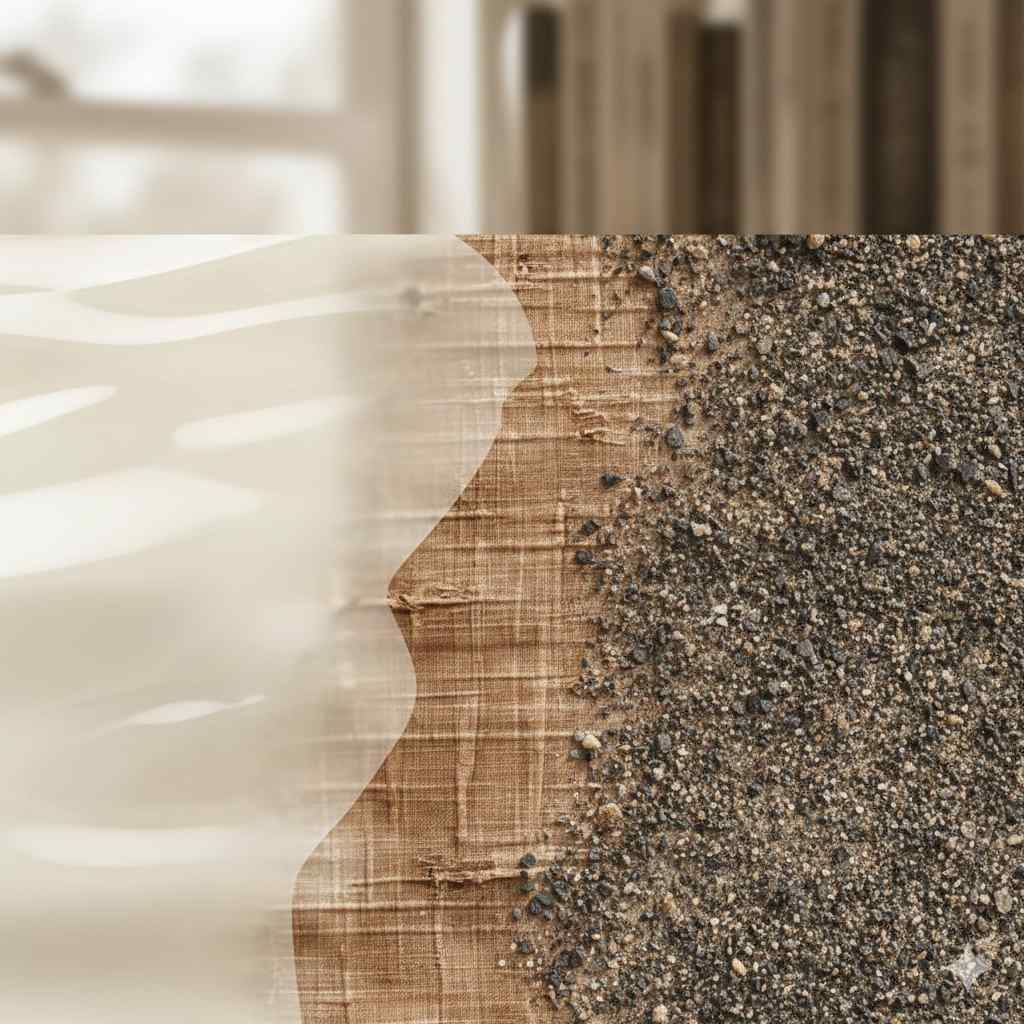
In textured prose, “surface” is the first thing the reader feels before anything else. It is the grain of the language, the texture at the level of words, the sensation as they first meet the eye. Some prose feels smooth and polished, while other prose feels rough and catches the reader’s attention with every syllable. Prose that feels gritty means the words demand more attention because they simply jump out at you.
Surface is the last dimension in this framework because it is the most visible. The first five dimensions lie beneath it and determine what the reader finds after entering the prose. The surface represents the culmination of all the underlying dimensions, serving as the face that the prose presents to the world. To understand surface, we first had to understand everything underneath.
I copied a page of Suttree by hand once, just to slow myself down. By the end, my hand hurt and I still hadn’t figured out how McCarthy did it. The so-called “surface” was all I could feel in the prose.
Smooth Surface
Prose with a smooth surface offers no resistance. The words deliver meaning without calling attention to themselves and slide past the reader’s attention, leaving only the scene behind. This is the prose of transparency.
Here is a passage from George Eliot’s The Mill on the Floss (1860):
The rush of the water and the booming of the mill bring a dreamy deafness, which seems to heighten the peacefulness of the scene. They are like a great curtain of sound, shutting one out from the world beyond.
Here, the sentences are plain and direct without unusual words to interrupt the flow. The syntax is straightforward, and the imagery arrives without fanfare. The reader moves through the passage without noticing the actual language used. The meaning arrives without the words getting in the way. That is the mark of a smooth surface.
Rough Surface
A rough surface catches the reader’s attention. The words do not slide past. They grab and hold the reader because they demand to be felt before they are understood.
Here is Charles Dickens from A Christmas Carol (1843):
Oh! but he was a tight-fisted hand at the grindstone, Scrooge! a squeezing, wrenching, grasping, scraping, clutching, covetous, old sinner!
The piled-on participles create a surface the reader cannot just glide over. Each word adds another ridge, another texture. The prose asks to be felt before it is understood, and the roughness of the prose is not a flaw but the source of its power.
Gritty Surface
A prose piece with a gritty surface goes even further. The words do not just catch the reader; they grate because the texture itself abrades. The words feel almost wrong, chosen for their grain rather than their meaning. This is the prose of discomfort.
Here is Cormac McCarthy from Suttree (1979):
Dear friend now in the dusty clockless hours of the town when the streets lie black and steaming in the wake of the watertrucks and now when the drunk and the homeless have washed up in the lee of walls in alleys or abandoned lots and cats go forth highshouldered and lean in the grim perimeters about, now in these sootblacked brick or cobbled corridors where lightwire shadows make a gothic harp of cellar doors no soul shall walk save you.
The sentence is long, the words unusual, and the syntax layered. Nothing about it is designed for easy passage. The reader must work through each phrase, feel each word, and register its grain. The grittiness is not a flaw. It is the surface doing its job.
I gave this book to a friend who returned it and said, “It reads the way gravel sounds.” I have never heard a better description of gritty prose.
What Surface Does
When reading textured prose, surface signals what kind of experience to expect. A smooth surface prepares the reader for ease, a rough surface for friction, and a gritty surface for difficulty. Surface also reflects the writer’s attitude toward the reader and the work. A smooth surface trusts the reader to move quickly toward meaning. A rough surface insists that meaning cannot be separated from the words. A gritty surface suggests that meaning should not come easily.
Surface is the first thing the reader encounters and the last thing the writer controls. It is the boundary between the writer’s decisions and the reader’s experience.
I came to realize that the first sentence of a book is like a handshake. Some are firm, some are limp, and some squeeze too hard. From this image, I learned to pay attention to how a book introduces itself.
The Texture of Prose: A Retrospective
This series began with a simple observation: prose has a texture that readers feel but often cannot name. Over the course of six articles, we have examined the various dimensions that contribute to this felt quality.
- Density packs meaning into sentences. A dense passage asks the reader to hold more at once. A sparse passage leaves room to breathe.
- Omission leaves things out and trusts the reader to fill them in. What is withheld can matter as much as what is stated.
- Speed controls how quickly the reader moves through a passage. Short sentences accelerate. Long sentences slow things down.
- Musicality adds rhythm and sound to prose. Repetition, cadence, and sonic patterns create texture that the ear registers even in silent reading.
- Gravity gives sentences a sense that more is at stake than the words alone can hold. Some prose feels charged, as if it carries something that cannot be stated directly.
- Surface is the grain of the language itself. Smooth prose lets meaning through without friction. Rough prose catches the reader’s attention. Gritty prose demands work.
The framework presented here is not meant to evaluate prose but to give readers a systematic method to analyze it. Different readers will notice different things, and that is fine. Texture is not something a writer adds to prose. It is something readers encounter when they pay attention.
For a complete discussion of how these six dimensions work together, see the main article: Texture as Element of Prose Style: How Language Feels. It lays out the full framework and shows how density, omission, speed, musicality, gravity, and surface combine to create the felt quality of prose.
Writing Styles: Key Elements, Types, and Examples
I picked these two articles from the archive because they bookend the discussion of surface in textured prose. The guide to “Writing Styles” introduces the foundational elements of prose that together create its surface. The piece on “Martin Amis” profiles a writer whose work exemplifies a rough, textured surface in practice, which gives the reader a concrete example of the concepts at work.