My Reading Note
I came to this research defensively. For years, I’d justified hours lost in novels as a kind of moral training. Finding that neuroscience framed it not as an escape but as a complex cognitive performance was a revelation. It validated the sustained, focused work of the page as one of the mind’s most active states.
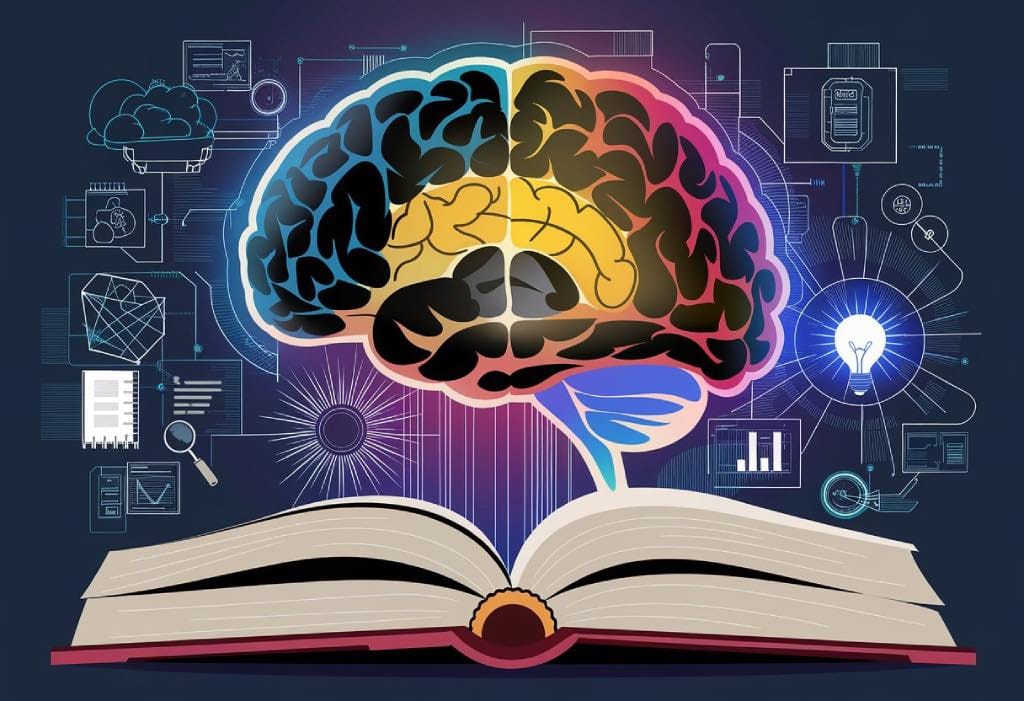
We often speak of “getting lost in a book.” The phrase suggests a passive surrender, a gentle forfeiture of self. However, neuroscience reveals a more active process. When you follow a character through a complex moral decision, parse the layered metaphor of a poem, or track the intricate plot of a novel, you are not escaping your mind. You are deploying it at its highest pitch. The act of reading literature ignites a vivid constellation of neural activity, a storm of synthesis, simulation, and sense-making that alters the very organ doing the work.
This exploration shifts the inquiry from how literacy is acquired to the question that defines our experience with literature: is reading good for your brain? Neuroscience offers a definitive confirmation. It demonstrates that serious engagement with texts does more than convey information; it operates as a rigorous cognitive discipline. Such engagement fortifies attention, constructs frameworks for empathy, and refines the capacity for abstract thought. The neural activation produced through metaphor, narrative, and argument reveals the page as an instrument that orders and refines perception.
The Neurological Symphony of Narrative
The common conception of the act of reading paints it as a simple visual intake, a linear transfer of ideas from page to mind. Neuroscience reveals a more complex truth: no single brain region holds the entire story. Engaging with a narrative text initiates a precise collaboration across a specialized network. This neural architecture, developed and strengthened through practice, is what converts static text into dynamic mental simulation.
The process begins in the occipital lobe, where the visual cortex deciphers shapes into letters. This information streams forward to a left-hemisphere hub often termed the brain’s “letterbox”—the visual word form area (VWFA). Here, clusters of neurons fire selectively for recognized words, transforming “c-a-t” into the unified concept cat. This signal then diverges along two major pathways essential for comprehension.
One pathway projects forward to Broca’s area in the frontal lobe, a region implicated in processing syntactic structure and managing the cognitive demands of complex sentences. The other pathway engages a distributed network for semantic processing. This network includes Wernicke’s area—which acts as a phonological hub for assembling the sound structure of words—and extends to the middle temporal and angular gyri, which are central for assigning meaning and conceptual context. This revised framework moves beyond the classic model of isolated language centers, reflecting the contemporary view that comprehension emerges from the integrated function of this entire network.
This integrated linguistic data now fuels the distinct phenomenon of literary reading: embodied simulation. As a narrative unfolds, the core language network propels information into the brain’s default mode network—a system associated with rest, introspection, and imagination. Within this state, words transcend their symbolic function. A described setting activates the parahippocampal place area, the region dedicated to processing spatial layouts. Narrated actions engage the motor cortex. Suggested scents can stimulate the olfactory cortex. The brain therefore does not merely decode a story; it enacts one, constructing a continuous simulation of its sensory and emotional logic.
This is the “aha” moment that changed how I read. When a character runs, I’m not thinking about the word “run”—some part of my motor cortex is preparing to move. The page becomes a set of neurological stage directions.
This embodied simulation explains the unique potency of literary engagement. It is a full-brain exercise that integrates low-level decoding with high-order abstraction, sensory processing with emotional inference. The neurological symphony summoned by a book is not a passive reception of data but an active, constructive performance within the mind’s theater. The next section examines the lasting imprint this performance leaves on the brain’s architecture and its functional capacities.
Cognitive Sculpting: The Lasting Benefits of a Reading Habit
The neural symphony activated by a single reading session is impressive. Its true significance, however, emerges only over time. Like a muscle exercised repeatedly, the brain’s reading network adapts to its task. This capacity for change, known as neuroplasticity, ensures that the regular, deep engagement demanded by literature leaves a permanent mark on the brain’s structure and functional capacity. The benefits of this engagement contribute to what neuroscientists term cognitive reserve, a built-in resilience against age-related decline.
Strengthening the Mental Apparatus
The primary benefit of sustained reading is the increased efficiency and connectivity of the very networks described in the previous section. Functional MRI studies show that the white matter tracts connecting the visual word form area to language and semantic regions strengthen in individuals who read frequently. This evidence reflects a direct biological optimization. Confronted with the complex task of integrating visual symbols, sound, meaning, and narrative simulation, the brain fortifies the communication pathways between these regions. The result is a neural architecture that processes written information with greater speed and reduced effort, allocating freed resources toward complex analysis and abstract reasoning.
Furthermore, the act of following complex plots, holding multiple characters in mind, and tracking layered arguments constitutes a powerful workout for working memory and executive function. These are the brain’s command-and-control centers, responsible for focus, task-switching, and problem-solving. Literary fiction, with its ambiguous characters and unresolved moral dilemmas, is particularly effective at training these systems, requiring the reader to juggle perspectives, manage uncertainty, and infer motives without clear authorial guidance.
Building a Cognitive Reserve
Perhaps the most profound long-term effect is the development of cognitive reserve. This concept explains why some individuals show fewer clinical symptoms of brain aging or pathology, even when scans reveal physical changes. A brain with high cognitive reserve has a richer, more interconnected neural network, built through a lifetime of intellectually stimulating activities. Deep reading is a premier such activity.
The theory posits that by continuously building dense, alternative neural connections, the brain creates a functional buffer. When some pathways are compromised by age or disease, the brain can recruit these well-developed alternative routes to maintain performance. Longitudinal studies have linked regular engagement in complex cognitive activities like reading with a slower rate of memory decline and a reduced risk of developing dementia. This process produces a brain with greater structural resilience, one defined by its adaptive capacity as much as its literacy.
From Circuit to Capacity
This sculpting process transforms the transient act of reading into an enduring cognitive trait. The efficient language network, the disciplined attention, and the dense connective architecture become standard operating procedure for the brain. This is the definitive answer to whether reading is good for one’s brain: it is a formative practice that physically alters the organ’s wiring to enhance its operational capacity and fortify its long-term health. The following section will examine how different literary genres apply this neural apparatus in distinct ways, further specializing the brain’s interpretive capacities.
Genre as Neural Therapy: How Fiction, Nonfiction, and Poetry Train the Mind
If sustained reading acts as cognitive conditioning, then literary genres are the specialized regimens within that discipline. Each form (fiction, nonfiction, poetry) presents unique cognitive challenges, engaging and strengthening specific neural circuits. This selective activation suggests that a diverse reading diet does not simply convey different content. It cultivates distinct modes of thought.
Fiction: The Empathy Circuit
Narrative fiction’s primary gift is its training of social and emotional cognition. To follow a novel is to track the hidden motivations, conflicting desires, and unspoken regrets of characters. This continuous practice in inferring mental states (a capacity called Theory of Mind) activates a network centered on the medial prefrontal cortex and the temporo-parietal junction. Functional MRI studies reveal that reading about a character’s emotional dilemma stimulates the same neural substrates used to navigate real social interactions. Literary fiction, with its complex, psychologically ambiguous characters, demands particularly intense engagement from this network. The reader must tolerate uncertainty, synthesize contradictory cues, and inhabit perspectives alien to their own.
This is why I often feel emotionally fatigued after a great novel, not just mentally tired. It’s not the plot I’m tracking, but the substance of unspoken intentions between characters. It is a full-body social workout.
Nonfiction: The Architecture of Argument
Nonfiction, in contrast, trains the brain in logical structuring, evidence evaluation, and analytical synthesis. Engaging with a historical analysis, a scientific treatise, or a philosophical argument requires the reader to hold propositions in mind, assess their validity, and follow a linear progression of ideas to a conclusion. This work heavily engages the dorsolateral prefrontal cortex (DLPFC), a region central to executive functions like working memory, reasoning, and critical analysis. The mental action here is one of intellectual assembly: establishing a framework of facts, identifying the author’s thesis, and discerning the supporting logic. Where fiction explores the subjective territory of feeling, nonfiction navigates the objective domain of fact, reinforcing the brain’s capacity for dispassionate scrutiny and logical comprehension.
Poetry: The Precision of Compression
Poetry operates on a different scale by offering a concentrated exercise in linguistic precision, metaphorical thinking, and rhythmic processing. The compressed nature of poetic language forces a deceleration of attention. Each word, its sound, its placement, and its multiple possible meanings must be assessed. This process activates the brain’s auditory cortex (even in silent reading) due to poetry’s inherent meter, alongside a widespread network for semantic retrieval and reinterpretation. The brain’s literal, sensory response to metaphor—activating the sensory or motor cortex—is a well-documented phenomenon. Furthermore, a foundational fMRI study on poetry composition showed that the creative composition of poetry involves a characteristic brain state balancing motivation and cognitive control.
Metaphor, poetry’s central device, requires the brain to perform a specific kind of conceptual blending, e.g., finding the shared ground between “love” and “a rose,” or “grief” and “a raven.” This strengthens cognitive flexibility—the ability to hold two disparate concepts in tension and derive new meaning from their conjunction.
The Integrated Mind
A dedicated reader of varied genres, therefore, does not possess a single “reading brain.” They command a set of mental faculties refined by different forms of intellectual labor. The empathetic flexibility nurtured by fiction, the analytical rigor demanded by nonfiction, and the symbolic dexterity required by poetry together create a more agile and comprehensive intelligence. This specialization demonstrates that the value of reading lies not only in the information absorbed but in the specific, repeatable neural workouts that each genre provides, structuring our fundamental capacities for understanding.
Reading as an Act of Self-Cultivation
The journey from symbol to meaning, from page to perception, reveals reading as one of the most complex and consequential tasks the human brain undertakes. The evidence from neuroscience provides more than a mechanistic explanation; it offers a profound justification for engagement with texts. The brain that engages deeply with literature is an active, adaptive organ that builds efficient circuits for language, trains specialized networks for empathy and analysis, and accumulates a reserve of neural resilience. This process of cognitive sculpting, refined by genre and supported by focused immersion, demonstrates that reading is fundamentally formative. To read seriously is to undertake a sustained practice of mental expansion, a method through which we compose the architecture of our own minds.
Elements of Poetry: A Reader’s Guide
Understanding Narrative Structure: A Reader’s Guide
The Practice of Literary Attentiveness: How Deep Reading Alters the Experience of Fiction
These three posts from the archive put the brain science into practice. “Elements of Poetry” examines the concentrated language that forces the mind into its most flexible, metaphorical mode. “Narrative Structure” details the complex architectures that train working memory and executive function. “Literary Attentiveness” explores the focused state necessary for the brain’s full simulation to engage. For me, they translate the biological theory of the reading mind into a set of usable, high-level reading disciplines.
Further Reading
10 Brain Reasons To Make Reading a Habit by Jim Kwik, Medium
Brain Research May Point to Changes in Literacy Development by Sara Bernard, Edutopia
Neuroplasticity: How the brain changes with learning by Ross Cunnington, Science of Learning Portal
The “Reading Brain” is Taught, Not Born: Evidence From the Evolving Neuroscience of Reading for Teachers and Society [PDF file] by Rebecca Gotlieb, Laura Rhinehart, and Maryanne Wolf, The Reading League