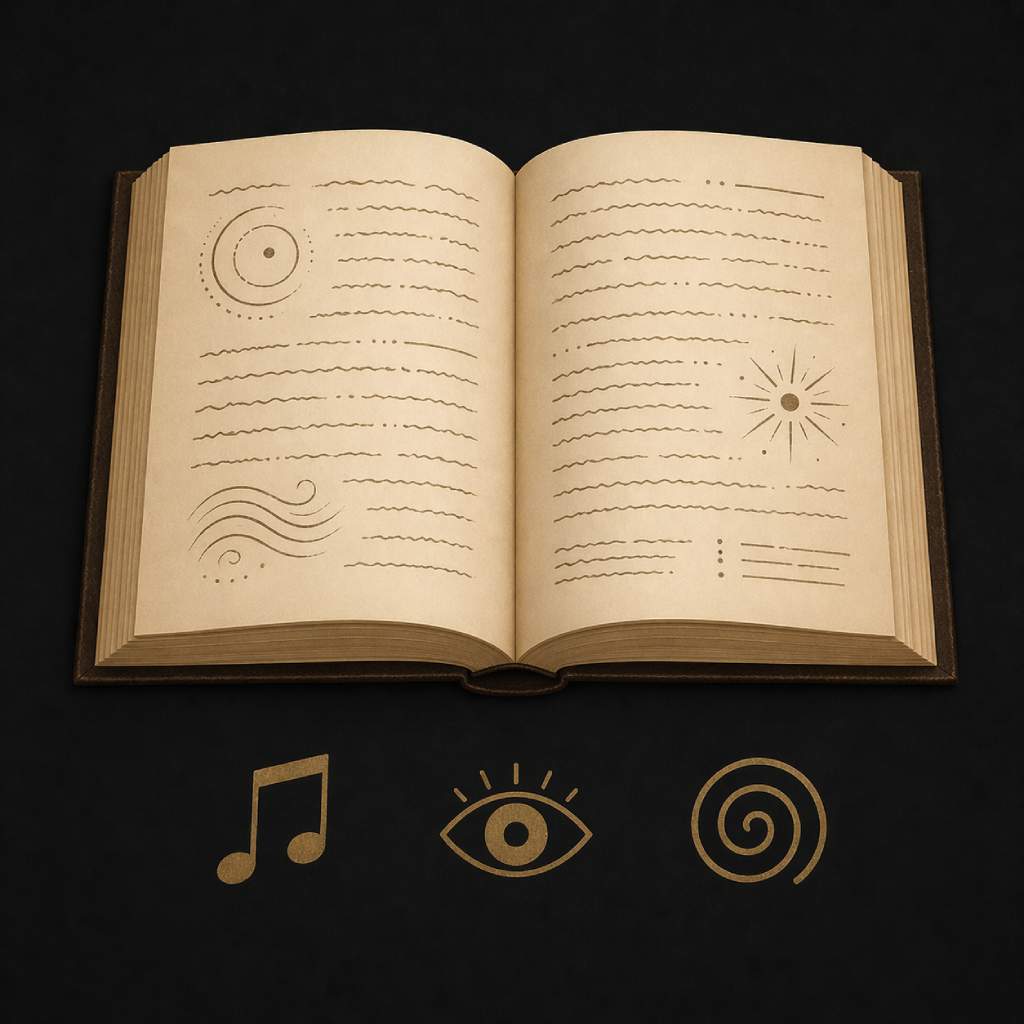
My Reading Note
I avoided poetry for years because I never knew what it was supposed to mean. Then I read a poem and stopped asking myself constantly what it meant. I just listened to the sound of the lines, and a realization took hold. This article is about what that realization taught me.
Most readers approach poetry as a treasure hunt. They dig for buried meanings while decoding symbols and chasing the single correct interpretation, but this stance produces only frustration. The reader feels inadequate; the poem feels pretentious. Neither response is accurate, and this misjudgment does not arise from a failure of intelligence or an excess of obscurity. The stance itself is the problem.
A puzzle demands a solution, and the solver who finds none will declare the puzzle broken. A poem asks for attention without demanding immediate payoff. Approach a poem as a puzzle, and you will abandon it when the solution fails to appear. Approach it as a territory to explore, and you will keep walking. Poetry reading benefits from three distinct stances, and the reader must move through them in sequence. Most stop at the second stance and never reach the third.
A reader who follows the method described in this article for one week is likely to finish a poem they previously set aside. The claim can be tested, and the framework below provides the steps. The framework will not turn anyone into a poetry expert, but it will show a wary reader how to begin.
The Framework: Three Stances of Poetry Reading
The three stances work best in sequence. Skipping any stance breaks the method, for the Ear prepares the Eye, and the Eye prepares the Gut.
| Stance | Question | Duration | Common Mistake |
|---|---|---|---|
| The Ear | What does this poem sound like? | First reading | Looking for meaning before hearing the sound |
| The Eye | What does this poem show me? | Second reading | Stopping at unfamiliar words |
| The Gut | What does this poem make me feel? | Third reading and beyond | Demanding immediate comprehension |
Each stance is explained below.
Stance One: The Ear
The first reading of a poem should not chase meaning but register sound. Read the poem aloud, or in a whisper if full volume is not feasible, and then listen for where your voice rises and where it falls. Notice where you pause, for these pauses and inflections are not accidental; they are instructions embedded in the poem’s rhythm.
A poem communicates through sound as much as through meaning. The arrangement of vowels and consonants, the length of lines, and the placement of pauses all carry information that a silent reading will miss. Reading aloud forces the reader to encounter these elements directly.
One rainy afternoon, I spent reading a single Elizabeth Bishop poem aloud, and it revealed to me how the vowels shifted from line to line. I could not have told you what the poem was about, but I knew the sound of its loneliness.
What this stance corrects: The habit of searching for symbols before hearing the rhythm.
How to know you have done it correctly: You can hear the poem in your head after closing the book. A line repeats without your permission. That repetition is the poem working.
Try this: Take any short poem. Read it silently, then read it aloud. That difference is part of the poem.
Stance Two: The Eye
The second reading is for what the poem shows you: images, actions, and objects. Ask what they are, not what they mean. Look at what the poem places in front of you: a crow perches on a branch, a bell hangs in a tower, and a plum rests on a counter. See these objects as themselves before asking what they might represent. The meaning arrives later, and only if the image holds.
Most readers stop at unfamiliar words and immediately reach for a dictionary. They search for historical context and treat the poem as a document to be decoded. This is a mistake, for the texture of an unfamiliar word matters more than its definition. The sound of “eldritch” in the mouth tells the reader something a dictionary cannot.
What this stance corrects: The habit of stopping at unfamiliar words or reaching for interpretation too soon.
How to know you have done it correctly: You can list five things the poem describes without using any abstract nouns. “Sorrow” is not allowed. “A wet street under a broken streetlight” is allowed.
Contrastive evaluation: The dictionary method can fail the new poetry reader because it fragments attention. A reader who stops to look up “eldritch” in line two will miss the sound pattern that makes “eldritch” the right word. At this point, the meaning of the word matters less than its texture in the mouth. In this framework, save consulting the dictionary until after the third reading, when the ear and the eye have completed their work.
The word “eldritch” stopped me cold the first time I encountered it. I reached for a dictionary, then stopped myself. I said the word aloud instead. The sound alone told me what I needed to know.
Try this: Read a poem and write down every concrete noun, ignoring adjectives and verbs. You now have a map of the poem’s world.
Stance Three: The Gut
The third reading is for what stays with you: a line that will not leave, an image that returns days later, or a question the poem leaves open. Linger there. The reader who demands immediate comprehension will abandon the poem, but the reader who tolerates uncertainty will come back to the poem.
The gut is not a metaphor for intuition but the seat of the reader’s unanalyzed response. Confusion is a gut reaction, and so is boredom, and so is a single line that catches in the throat. Trust these responses before you explain them.
What this stance corrects: The demand that a poem yield its meaning on first encounter.
How to know you have done it correctly: You remember a line from the poem one week after reading it. You do not need to remember the whole poem. One line is often enough.
Try this: Read a short poem, then set the book down for three days. Do not think about the poem. On the fourth day, write down whatever comes back. What returns is what the poem has actually lodged in your memory, and that is the poem’s true measure.
The three-day wait felt absurd the first time I tried it. I forgot the poem entirely by the second day. On the fourth day, a single line came back to me while I was washing dishes. I wrote it down and felt immediately that that line was the entire poem.
Where to Start
Do not begin with Milton or Eliot or the complete sonnets of Shakespeare. Begin with poets who are not primarily difficult on the surface.
| Try this poet | Because |
|---|---|
| Mary Oliver | Her lines are clear. The animals and landscapes stay with you. |
| Billy Collins | He jokes. He talks to the reader. He admits when he does not know. |
| Naomi Shihab Nye | She finds poetry in grocery stores and schoolyards. |
| Robert Frost | His poems tell stories. The deeper meaning arrives after the story ends. |
| Langston Hughes | His rhythms come from jazz and speech. He writes anger without losing beauty. |
Read one poem by each. Stay with the one that lingers.
What Poetry Asks
Poetry asks the reader to slow down. Unlike most novels, which carry the reader through plot, or essays, which persuade with argument, many poems offer neither conventional momentum nor explicit “evidence” in the way essays do. It offers a few lines on a page and the demand that the reader revisit them.
The demand to reread is one of the poem’s essential tools. The reader who accepts it learns to read differently: to reflect on the poem’s fragments rather than the sequence of its lines. That skill transfers to prose. A reader who has learned patience from poetry notices rhythm, sentence construction, and the force of a single word. Poetry will not solve your problems, but it may improve how you read.
Why Conventional Advice Fails the Uninitiated Reader
Most guides to poetry reading offer the same instruction: read the poem aloud, then read it again. The advice is sound but incomplete, for it tells the reader when to begin while saying little about when a step is finished. The three-stance framework addresses this gap by giving each stance a clear endpoint: the Ear ends when a line repeats in memory, the Eye ends when the reader can list the poem’s concrete images without naming what they mean, and the Gut ends when the reader writes down whatever surfaces after three days.
The conventional advice leaves the reader alone with the poem. The framework provides a sequence of small, testable steps, and knowing when a stance is finished replaces uncertainty with direction. Each finished step prepares the reader for the next. The simple knowledge of what to do next, more than patience alone, separates a reader who abandons a poem from one who continues through it.
Close Reading Poetry: A Methodological Primer
Elements of Poetry: A Reader’s Guide
I also recommend reading these old posts from the archive after finishing this article. The essay on “Reading Poetry as Presence” argues that difficult poems reward rereading rather than interpretation, which directly supports the Gut stance in this article. The methodological primer on “Close Reading Poetry” provides the analytical foundation that this article omits—it assumes the reader already knows how to annotate and now needs to build an argument from those observations. Lastly, the reader’s guide to the “Elements of Poetry” offers the essential vocabulary that makes the Ear and Eye stances possible in the first place. These three posts move from the sensory stances advocated here toward the more structured work of academic analysis.
Further Reading
- Why Poems Don’t Make Sense by Matthew Buckley Smith, 32 Poems
- So Much Depends Upon: America’s Most Misread Poems by Colleen Abel, Ploughshares at Emerson College
- How can you read and understand poetry? on Quora
- How do you learn to properly interpret the poetry of contemporary poets? on Reddit