My Reading Note
I first encountered Lauren Groff through her story collection Florida, which I picked up because of its cover. I expected stories about beaches and tourists but found characters trapped in humid landscapes, their bodies failing them, and their ambitions curdled by forces they could not name. I realized halfway through that Groff was not writing about the concept of liberation but about what happens inside constraint. This article is my attempt to work out what that means across her work.
Lauren Groff is often praised for her prose, her historical range, and her feminist themes. Reviews emphasize not only the beauty of her sentences and the strangeness of her settings but also the power of her female characters. There is nothing wrong with any of these claims, but they fail to identify a deeper pattern that runs across her work: the relationship between embodied limits and systemic structures. Groff’s characters do not transcend their limits; they test them and push against the walls. Sometimes, they budge an inch, but more often, they do not.
Across her novels and stories, Groff returns to the same problem: her characters are bounded by their bodies, whether through sickness, hunger, desire, or childbirth, and by the ecological or social systems they inhabit. A commune in upstate New York, the swamps and storms of Florida, a twelfth-century French abbey, and the colonial wilderness are not simply backdrops for her stories but determining forces.
The Body as Limit
Groff returns obsessively to the body—its hungers, pains, and betrayals. In The Vaster Wilds (2023), a young girl flees a colonial settlement during the Starving Time. The novel follows her through the wilderness as her body fails; she starves, succumbs to the cold, and is pursued by hunger and by memory. The plot is not a series of events but a catalog of physical limits. What can the body endure and how far can it be pushed before it breaks? The novel enacts these questions instead of answering them.
The Vaster Wilds is the most extreme example of Groff’s interest in the body. The novel strips away everything except survival. There is no society, no conversation, no love—just a body moving through a landscape. It is a test case for what fiction can do when it removes every other variable.
In Matrix (2021), the body becomes something else entirely. Marie de France, the novel’s protagonist, possesses a body that is large and strong, an instrument of power she uses to build, to intimidate, and to endure. Yet this same body is also a site of discipline because Marie denies herself food, sleep, and comfort as the abbey demands her compliance. The body functions as a limit and simultaneously as a tool for testing exactly where those limits lie.
The short stories in Florida (2018) swarm with bodies that fail. A mother cannot shield her children from a hurricane. A woman’s sickness walls her off from her family. A man’s body collapses in the crushing heat. These plots concern what physical breakdown exposes: the self moored to a fragile, deteriorating organism. Groff treats this as an unremarkable fact, a condition of being alive rather than an occasion for sentiment.
Ecological and Social Systems as Structure
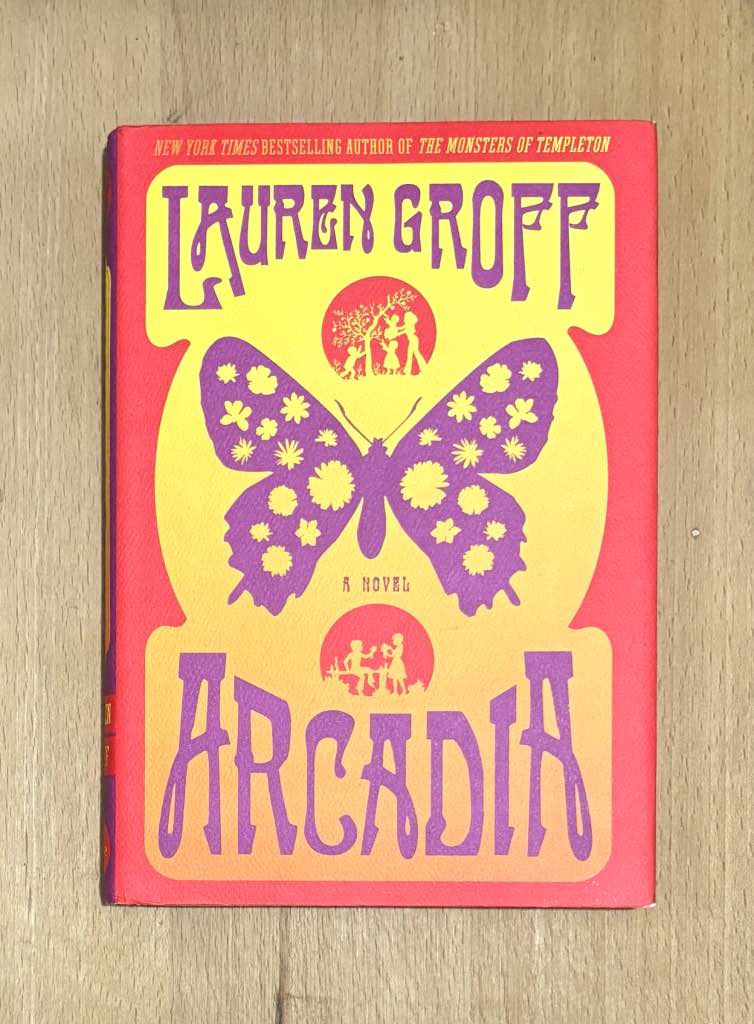
Groff deploys setting as a causal agent rather than a backdrop. The commune in Arcadia (2012) functions as an ecosystem with inputs and outputs, cycles of growth and dissolution, and internal pressures that eventually overwhelm its structure. The novel follows Bit, the first child born into the commune, from childhood to middle age. The commune generates the story instead of merely containing it. The plot makes the system’s failure visible, tracing each fracture back to its source.
The Florida landscape in Florida follows a different logic. It is a system that remains indifferent, a system that withholds concern. Hurricanes, heat, alligators, sinkholes—the landscape extends no regard for human desire. The characters in these stories receive only the landscape’s profound disregard, and that disregard becomes the horror. The stories reach no conclusion. They simply stop, while the landscape continues without them.
Matrix presents a third model: the abbey as a social system that enables and constrains in equal measure. Marie de France transforms a failing nunnery into a thriving community by building walls, managing resources, and negotiating with powerful men. The abbey becomes her instrument and her cage simultaneously, a place she cannot leave and within which she discovers a peculiar form of power. The system offers no liberation but provides a place to work.
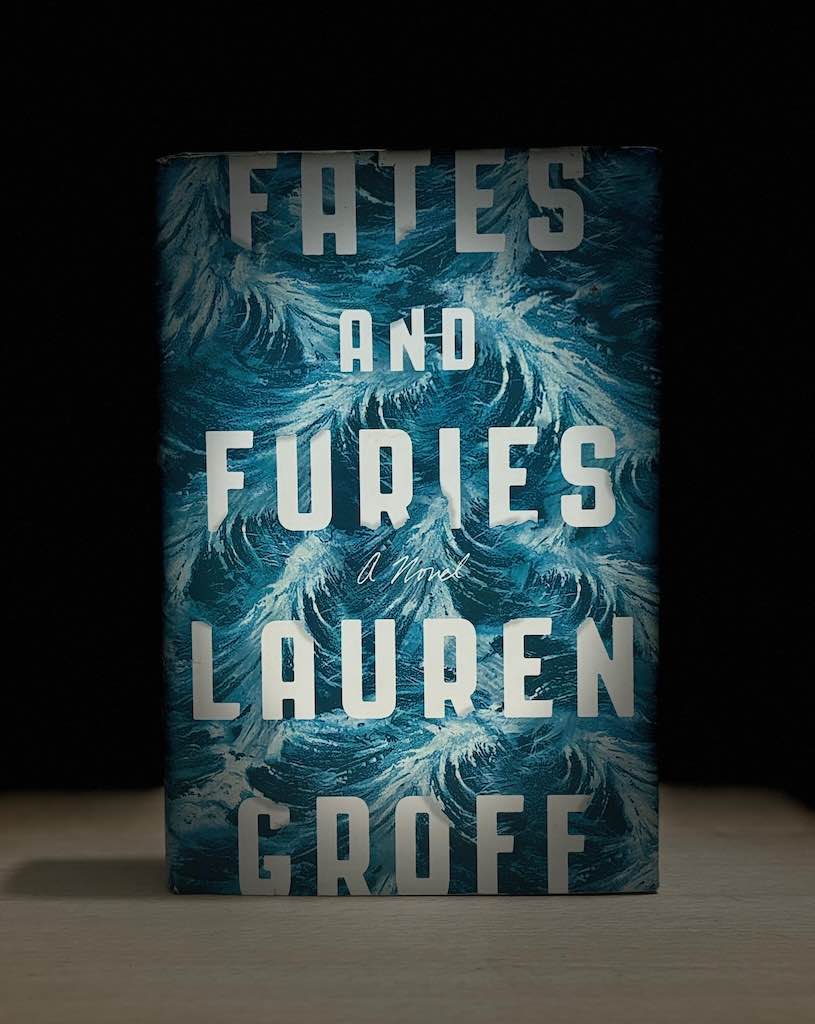
I have not yet mentioned Fates and Furies, Groff’s 2015 novel. The marriage at the center of that novel is, in Groff’s hands, another enclosed system with its own climate, scarce resources, and predators moving unseen through the undergrowth. Lotto experiences the marriage as a sunlit expanse, while Mathilde experiences it as a territory she must manage, defend, and survive in. The novel’s split structure is the formal expression of this truth: two people inhabit the same system and live in entirely different worlds. I believe that critics who read the book as a psychological thriller about secrets miss the deeper point. The marriage secrets matter less than the structure that makes them necessary.
The Isolated, Ambitious Woman
From Willie Upton in The Monsters of Templeton (2008) to Marie de France in Matrix, Groff returns to a single figure: the isolated, ambitious woman cut off from a thriving community, who wants something (knowledge, power, and freedom) and pursues it alone. She functions less as a heroine than as a test case, a specimen through which Groff examines what happens when a woman’s desire meets a world built to withhold what she seeks.
Willie returns to her hometown pregnant and disgraced, driven by the desire to know her family’s secrets, but the knowledge she unearths across generations does not save her—it only gives her a more complicated story to carry. Marie de France pursues power and achieves it; however, this power is primarily administrative and architectural, rooted in the daily sustenance of the body, resulting in a transformation of the abbey’s walls and fields that leaves her fundamental isolation intact, with her ambition both realized and limited by the same action. The women in Florida want smaller things and rarely receive them; their ambition is scaled to the ordinary demands of survival, which Groff treats with the same gravity she grants to empire-building and genealogical excavation.
Groff’s ambitious women are not aspirational figures. They are not role models but experiments. What happens when you put a woman who wants something into a system that does not want her to have it? The answer is never liberation—it is negotiation, compromise, and sometimes failure.
Synthesis: What Happens Within Constraint
Groff’s fiction concerns what the body can endure, what systems allow, and what ambition can achieve without escape because transcendence holds no interest for her. Her characters push against the walls. The walls shift by an inch or remain immovable, and the narrative measures that distance with exacting care.
The narrative form reflects this tension. Groff’s plots are circular, repetitive, and resistant to closure. Arcadia ends not with Bit’s escape but with his return. Matrix ends with Marie’s death, not her triumph. The stories in Florida stop rather than conclude. There is no exegetical moment where everything becomes clear. There is only the accumulation of what has been endured.
Groff writes against the myth that hard work leads to escape, that ambition delivers liberation, and that the self can outrun its body and its systems. Her fiction answers with a steady negative. You push, and the wall stays. The only question worth asking is what you become while pressing against something immovable.
What strikes me each time I return to Groff is how thoroughly she avoids the escape plot. Her characters stay put in the commune, the swamp, and the abbey. They adapt or they fail, and the narrative simply catalogs the consequences. I find this far more disturbing than any story about liberation because it forces the question: what do you do when every exit is sealed?
Final Thoughts
Groff’s originality resides neither in her prose nor in her historical imagination, though both command attention. It resides in her steady challenge to a premise that governs most contemporary American fiction: the assumption that the self can step outside its conditions and remake the world through will or insight. Her work proposes something closer to the opposite. The body imposes a ceiling, and the system enforces its terms. Ambition works within these constraints or exhausts itself against them.
This places Groff in a tradition that runs counter to the dominant Emersonian strain in American letters, with its faith in self-reliance and radical renewal. Her true precursors are the writers who understood enclosure: Edith Wharton, who mapped the social architecture that walls women in; James Baldwin, who traced how systemic pressures determine interior life down to the sentence level; and the late work of Ursula K. Le Guin, who spent her final novels asking what freedom can mean when the body and the polity both impose hard limits. Groff extends this counter-tradition into the twenty-first century by making the environment, whether ecological, architectural, or institutional, into a formal principle rather than a thematic concern.
Groff’s fiction asks the question that stories of transcendence avoid. What do we make here, inside the walls, with the materials at hand? Her answer is never everything. It is always something. The value of her work lies in how precisely she measures that distance and in her insistence on seeing the walls for what they are.
How Setting Acts as Character: Five Analytical Lenses
If the Groff piece sharpened your sense of how setting can act as a structural driver rather than a backdrop, the five analytical lenses on the “Setting as Character” post provide the toolkit to apply that insight across other novels. And if Groff’s isolated, ambitious women linger in your mind, the “Women’s Fiction” post complicates the very label those characters both inhabit and defy, tracing how a genre built on emotional transformation proves far more expansive than its marketing suggests.
Further Reading
- Lauren Groff on Blending Research and Imagination in Historical Fiction by Jane Ciabattari, Literary Hub
- My World Is Full Of Vagueness And Myth: An Interview With Lauren Groff, Author Of Fates and Furies by Natalie Villacorta, Electric Literature
- My Own Boundaries Seem to Be Fading: An Interview with Lauren Groff by Lucie Shelly, The Paris Review
- I have never hated a book more than Fates and Furies by Lauren Groff on Reddit