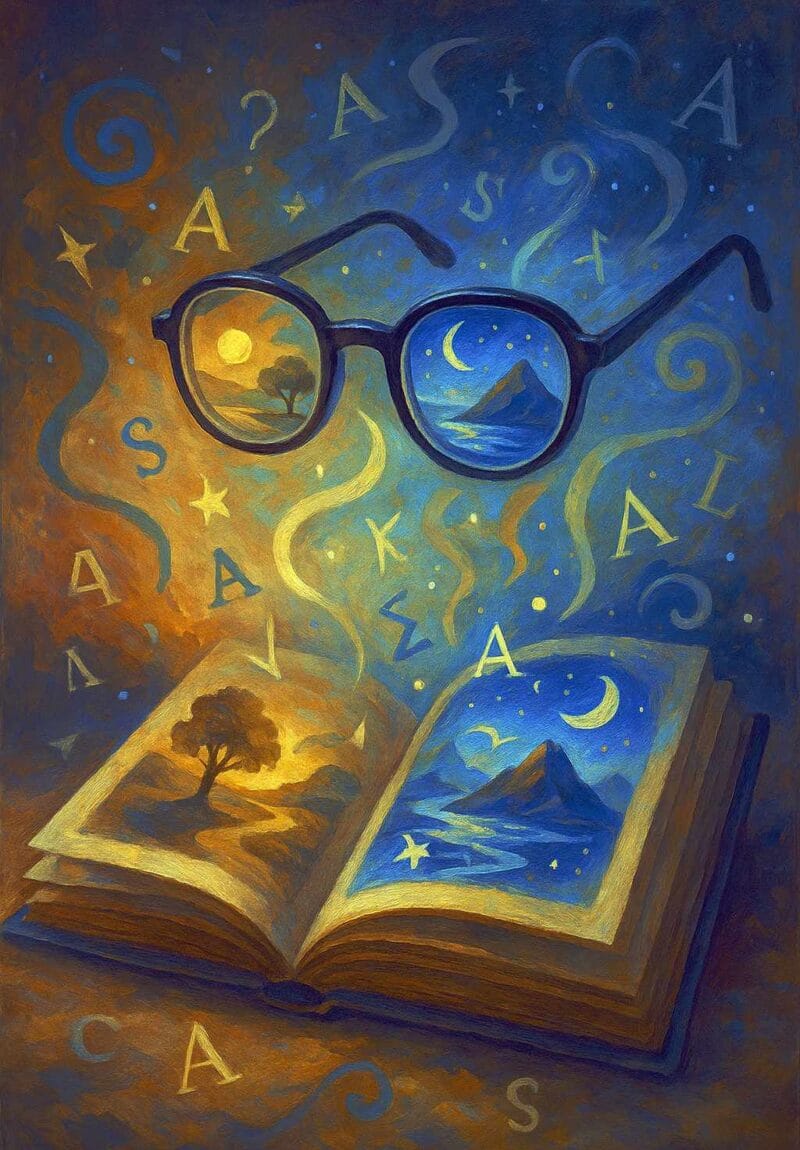
To call someone a voracious reader is to describe an appetite that disrupts the familiar picture of reading as leisure. One imagines a reader bent close to the text. They take in paragraphs with the rhythm of consumption. Each sentence is absorbed as though survival depended on it. Novels disappear in a matter of days. Anthologies are completed before the week is out. Shelves testify to the pace with their burden of completed volumes. What distinguishes this reader is the speed and also the craving, the sense that words are never enough. The act of finishing one book only sharpens the hunger for the next.
It is no accident that English, along with many other languages, turns to metaphors of eating when describing the act of reading. We speak of devouring books, of literary feasts, of stories that whet the appetite. Such images reimagine reading as consumption, as if language might nourish both body and mind, and the cultural importance of this metaphor is considerable. To call someone a voracious reader is to praise passion and endurance, yet the admiration is rarely without ambivalence. Does devouring books suggest mastery, or does it betray haste? Does appetite mean abundance of knowledge, or only accumulation without digestion?
Bibliophagy: The Ancient Image of Book Consumption
The word “bibliophagy,” from the Greek biblion (book) and phagein (to eat), carries with it centuries of association between knowledge and consumption. In various religious traditions, prophets consumed scrolls as a means to ingest divine revelation. Ezekiel is told to eat a scroll filled with lamentations, and John of Patmos devours a little book given by an angel. In each case, ingestion symbolizes union with sacred language. To eat the text is to make it part of oneself.
When the metaphor moved into secular contexts, it lost none of its potency. The eighteenth and nineteenth centuries celebrated bookish appetite as a mark of education and aspiration. The Victorian child who read everything within reach was praised as precocious, destined for distinction. Later, memoirists of the twentieth century remembered themselves as bookish gluttons, measuring their youth in volumes consumed.
Bibliophagy thus carries double significance. On one hand, it dignifies reading as nourishment, essential to life. On the other, it dramatizes compulsion, as though words must be swallowed whole, regardless of their taste or difficulty.
The Metaphor of Devouring Books
The most common expression of bibliophagy in modern English is “devouring books.” The phrase suggests urgency, as though time itself were scarce. To devour books is to consume them rapidly, almost desperately, as if one might otherwise go hungry.
This metaphor carries with it a kind of limitless drive. The devourer reads with a pressing need rather than obligation or assignment. Children described in this way are imagined as prodigies, their futures guaranteed by their endless appetite for stories. Adults who devour books may be admired for passion, yet their speed can also raise suspicion, as though quantity outweighed attentiveness.
Urgency here is both admired and questioned. A person who devours books displays hunger for discovery, yet also risks treating texts as disposable, consumed and then abandoned for the next course. The metaphor reveals as much about cultural desire as it does about individual habits.
Quantity and Breadth in Voracious Reading
Voracious reading is often described in terms of scale. Some measure it through the sheer number of books completed, others through the variety of genres, subjects, and periods embraced. Both dimensions of quantity and breadth help define the figure of the voracious reader. One signals pace and accumulation, the other signals curiosity and range. Together, they illustrate how appetite for books can manifest either as numerical conquest or as an ever-expanding horizon of discovery.
Counting and Speed
Voracious reading is often quantified. Annual challenges, digital trackers, and lists of accomplishments reduce appetite to numbers. How many books this year? How many in a lifetime? In such systems, each finished volume is both a token of devotion and a mark of conquest.
Numbers lend clarity but also distort. A reader who finishes two hundred books in a year is considered prodigious, but what if each was skimmed? Conversely, the person who spends months on a single dense novel may be seen as slow, though their attention might yield richer discoveries.
The fetish of quantity reveals how strongly the metaphor of eating governs our imagination. We treat books as calories, as consumable units, measured not by what they yield but by how many we can claim. The voracious reader thus becomes a competitor, racing not against others but against time.
Breadth and Variety
If quantity is one hallmark of the voracious reader, breadth is another. To consume widely across genres, centuries, and cultures is itself a form of appetite. The omnivorous reader leaps from Homer to contemporary thrillers, from philosophy to graphic novels. Appetite here is not only for volume but also for variety.
This breadth can be liberating. To devour books across subjects is to refuse confinement. It is to see literature as a banquet, every dish worth tasting. Curiosity becomes compulsion, each finished book a doorway into another. Yet such curiosity can also overwhelm. In attempting to read everything, one risks tasting without savoring, sampling without staying.
The Meticulous Reader: Slowness as Devotion
If the voracious reader embodies appetite, then the meticulous reader embodies a different kind of devotion. This figure is not defined by numbers or range but by duration, by the willingness to linger. A meticulous reader approaches the page with care, treating every phrase as worthy of attention, every sentence as an object that can reveal something more if granted the right patience. To read in this way is not to suppress appetite but to redirect it inward, turning it into a form of contemplation.
Time as Texture
For the meticulous reader, time is not an obstacle but a medium through which books disclose their nature. A slow reading of a novel changes the work: the pauses between chapters, the silences that stretch across evenings, the intervals in which the reader carries the book’s mood into daily life all become part of the experience. Slowness grants the text a kind of afterglow, a resonance that unfolds outside the moment of reading.
This relationship with time transforms reading into more than a transaction of information. It becomes a dialogue. The book speaks, but the reader answers with pauses, with revisits to earlier passages, with notes written in the margins. To give time in this way is to treat the book not as something to be conquered, but as a partner in conversation. Some works demand precisely this kind of slow engagement—dense philosophical treatises, lyrical prose, or poetry whose rhythms require attentive hearing. Yet even the simplest novel can be transformed by such patience, its textures becoming richer when the reader allows time to press itself into the act.
The Value of Slowness
The value of slowness lies not only in attention but also in intimacy. To move carefully through a book is to let it govern one’s thought gradually. This facilitates the process of gathering substance before judgment arrives. A metaphor encountered in passing may seem slight at first. When revisited and lingered over, however, it can reframe the work in its entirety. The meticulous reader cultivates an awareness of these subtle connections. They refuse to let them slip away in the rush to the final page.
This is not simply an aesthetic preference but an intellectual ethic. Slowness counters the treatment of books as units to be tallied, restoring them to their singularity. Each work is treated as a world of its own, deserving more than the cursory glance of appetite. To read slowly is to honor the integrity of that world, to acknowledge that some books cannot be absorbed in haste without loss.
Moreover, slowness makes possible the act of rereading. The voracious reader often moves on, satisfied by the completion of one book and eager for the next. The meticulous reader, however, circles back, treating a book as inexhaustible. Slowness is not the opposite of appetite but its way of deepening or extending it, as if saying that one book can contain multitudes if given the time to reveal them.
Appetite as Identity
The identity of the voracious reader has become archetypal. Authors often recall their youth in precisely these terms: the child who read everything within reach, who was always found with a book in hand, who consumed stories faster than libraries could supply them. This narrative functions as an origin myth, proof that the later writer was always destined for a life of letters.
Public discourse elevates the voracious reader as an emblem of intelligence and ambition. To admit to slowness, by contrast, can seem to confess deficiency. Yet this hierarchy is misleading. Prestige clings to appetite, but patience carries its own dignity. Scholars and critics often define themselves not through speed but through depth, through careful study that avoids the lure of haste.
Identity, then, is formed as much by rhythm as by content. Some claim the title of “voracious reader” proudly, while others align themselves with meticulousness, even austerity. Each carries its own cultural authority, and each implies a different way of valuing books.
The Seduction and Limits of the Metaphor
The metaphor of eating remains seductive because it captures intensity. To say someone devours books is to dramatize passion, to make reading visceral. It acknowledges the urgency with which some approach literature, the sense that reading is not leisure but necessity.
Yet the metaphor also distorts. Books are not food. They are not diminished by consumption; they remain, demanding re-engagement and reflection. To frame reading as eating risks trivializing attention. This suggests that once swallowed, a book is finished and its substance absorbed. But unlike food, a book does not vanish. Its presence persists, requiring thought, conversation, even rereading.
To deconstruct the metaphor is not to discard it but to recognize both its allure and its limits. Appetite is real, but so is patience. The voracious reader consumes, the meticulous reader savors, and together they reveal the range of ways literature enters human life.
The Dialectic of Fast and Slow
The opposition between voracious and meticulous reading is not absolute. Many readers move between both modes, depending on context. A detective novel may be devoured in a night, while a dense philosophical text may demand weeks of slow progress. Even a single book can stimulate both: the first reading consumed quickly, a later rereading approached with care.
This dialectic of fast and slow suggests that appetite and patience are not rivals but partners. Each enriches the other. Without appetite, reading risks stagnation. Without patience, it risks superficiality. The life of the mind requires both the hunger to move forward and the devotion to pause.
Why We Still Speak of Devouring Books
Why, despite its distortions, does the metaphor of devouring books persist? Perhaps because it translates intellectual passion into bodily terms. Appetite is visible, urgent, irresistible. To devour books is to treat them not as ornaments or tools but as sustenance, as essential to life as bread or water.
The metaphor also dramatizes the private nature of reading. Unlike public achievements, the act of finishing a book is invisible. To speak of devouring books constitutes this invisible labor. It turns private hours into an image others can grasp.
Yet most importantly, the metaphor captures the paradox of reading: that something as silent and interior as words on a page can feel as urgent as hunger. To read voraciously is to live as though stories were food. To read meticulously is to live as though each word deserved its own meal. Both metaphors—devouring and savoring—remind us that literature sustains, not through calories, but through imagination.
Further Reading
What exactly is a voracious reader? on Quora
What defines a voracious reader? on Reddit
How ‘Voracious Readers’ Miss Out On The Real Benefits Of Reading by Monica Nastase, Substack
In Defense of Voracious Reading by Philip Bunn, Law & Liberty