Explore This Topic
- Texture as Element of Prose Style: How Language Feels
- Density of Language: The Weight of Words in Textured Prose
- Omission in Prose: What Writers Leave Out Between Words
- Speed of Language: How Sentences Control Pacing in Prose
- Musicality in Prose: Rhythm and Sound of Textured Language
- Gravity of Language: When Sentences Carry Consequence
- Surface of Textured Prose: The Grain of Language
My Reading Note
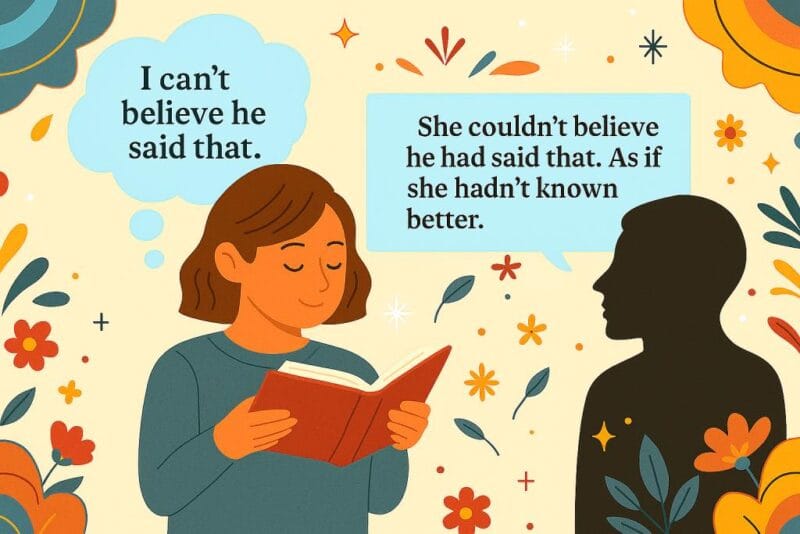
A college professor once made us read passages aloud in class. I dreaded it because my voice always sounded strange. But one day, one of my classmates read a paragraph from Woolf. The room went still, intently listening to how it sounded. The words had a rhythm I had never heard before.
Musicality in prose refers to its sonic qualities—how it sounds when read aloud or heard in the mind. This includes rhythm, cadence, repetition, and sound devices like alliteration and assonance. Moreover, musicality is distinct from speed. A passage can move quickly without musicality or move slowly with great musicality. It is also distinct from the metaphorical “rhythm” created by sentence breaks, which concerns pace rather than sound.
A sentence can mean one thing and sound like another. Its meaning is on the surface available to any reader, while the sound that works below carries the mood and tempo in ways the reader may not notice. This article is about that second layer—the music of prose. The first three articles in this series examined density, omission, and speed. This one attends to how prose sounds, whether read aloud or in silence.
What Musicality Is
Musicality in prose consists of several related but distinct elements.
- Rhythm refers to the pattern of stressed and unstressed syllables. English is an accentual language, and writers can arrange words to create effects similar to poetic meter. A sentence can move with a steady beat or vary its stresses to avoid monotony.
- Cadence refers to the rise and fall at the ends of sentences and clauses. It is a subset of rhythm, the way a sentence settles or suspends, the musical phrase of its conclusion.
- Repetition includes devices like anaphora (repeating words at the beginning of clauses), epistrophe (repeating at the end), and parallel structure. Repetition creates pattern, and pattern creates expectation.
- Sound devices include alliteration (repeating initial consonant sounds), assonance (repeating vowel sounds), consonance (repeating final consonant sounds), and sibilance (repeating “s” sounds). These occur beneath the words themselves and add texture to the language.
These elements do not work in isolation, however. A passage rich in alliteration may also have strong rhythm, and repetition can create pattern as well as emphasis. Writers orchestrate them together, and readers learn to attend to their combination.
Musicality in Repetition
Here is a passage from Charles Dickens’ A Tale of Two Cities (1859):
It was the best of times, it was the worst of times, it was the age of wisdom, it was the age of foolishness, it was the epoch of belief, it was the epoch of incredulity, it was the season of Light, it was the season of Darkness, it was the spring of hope, it was the winter of despair.
I memorized this passage easily in school without even trying. The repetition did the work for me.
The repetition is obvious and insistent. The same structure returns again and again, each time with new content. The effect is incantatory, almost biblical. The reader is not simply informed of contrast but made to feel it through the accumulating pattern. The rhythm created by repetition carries the meaning as much as the words themselves.
Musicality in Rhythm
Here is a passage from Virginia Woolf’s To the Lighthouse (1927):
So with the lamps all put out, the moon sunk, and a thin rain drumming on the roof a downpouring of immense darkness began. Nothing, it seemed, could survive the flood, the profusion of darkness which, creeping in at keyholes and crevices, stole round window blinds, came into bedrooms, swallowed up here a jug and basin, there a bowl of red and yellow dahlias, there the sharp edges and firm bulk of a chest of drawers.
The rhythm here is not created by obvious repetition but by the flow of clauses, the placement of pauses, and the gathering momentum of phrases like “creeping in at keyholes and crevices, stole round window blinds, came into bedrooms.” The reader moves with the darkness, carried along by the sentence’s own motion. The rhythm mimics what it describes.
I read this passage several times trying to locate its rhythm. Eventually I stopped looking and just let it carry me along.
Musicality in Sound Devices
Here is a passage from Vladimir Nabokov’s Lolita (1955):
Lo-lee-ta: the tip of the tongue taking a trip of three steps down the palate to tap, at three, on the teeth.
This passage is famous for making the reader feel the name in the mouth. The repeated initial /t/ sounds in “tip,” “tongue,” “taking,” “trip,” “tap,” and “teeth” create alliteration, while further /t/ sounds and other repeated consonants reinforce a dense pattern of consonance. These sound patterns, combined with the explicit description of the tongue’s motion “down the palate” to “tap…on the teeth,” give the sentence a texture that is almost tactile, so the reader does not just learn the name but experiences its physical articulation.
I once read the Nabokov lines to a friend over the phone. She said it sounded like I was singing. I had never thought about it that way.
What Musicality Does
Musicality creates texture that the reader feels even when reading silently. It can establish mood—the somber cadence of an elegy or the bright rhythm of a comedy. It can make passages memorable, lodging them in the mind through pattern and sound. It can emphasize themes, as when repetition in A Tale of Two Cities enacts the novel’s central oppositions. It can also reward reading aloud, encouraging the reader to slow down and attend to the language.
I used to skip paragraphs that felt musical when I was younger. At that time, it seemed like the writer was showing off. Now those are the ones I read twice.
This article examined musicality through three examples. Dickens showed how repetition creates an incantatory pattern, Woolf showed how rhythm can mimic what it describes, and Nabokov showed how sound devices can make language tactile. Each writer used musicality differently, but all three understood that how prose sounds is part of what it says.
The next article in this series will examine the fifth dimension of texture: gravity, or how sentences carry consequence. For the full framework, see Texture as Element of Prose Style: How Language Feels.
Writing Styles: Key Elements, Types, and Examples
Poetic Prose in Fiction: How Arundhati Roy and Charles Frazier Compose Story Through Language
The Intersection of Literature and Music’s Narrative and Poetic Expressions
I picked these three articles from the archive because each one approaches musicality from a different angle. The guide to “Writing Styles” introduces the foundational vocabulary for discussing prose—terms like diction, syntax, and voice that appear throughout this article. The piece on “Poetic Prose” examines how writers like Arundhati Roy and Charles Frazier use rhythm, repetition, and compression to create lyrical effects in fiction. The essay on “Literature and Music” explores how narrative techniques cross between the two art forms, showing that musicality in prose has parallels in actual musical composition. Together, they provide context for understanding how sound works in language.
Further Reading
- 8 Books That Transcend the Line Between Poetry and Prose by Nancy Miller Gomez, Electric Literature
- I think that prose rhythm has phrases just like music, but I can’t tell what makes certain feet group. Any insights? on Quora
- What’s your go-to novel for great rhythmic prose with a clear and unique voice?